
Exclusive design light switches: luxury finishes & elegant socket guide
12 May 2026
Contemporary light switches and sockets buying guide
15 May 2026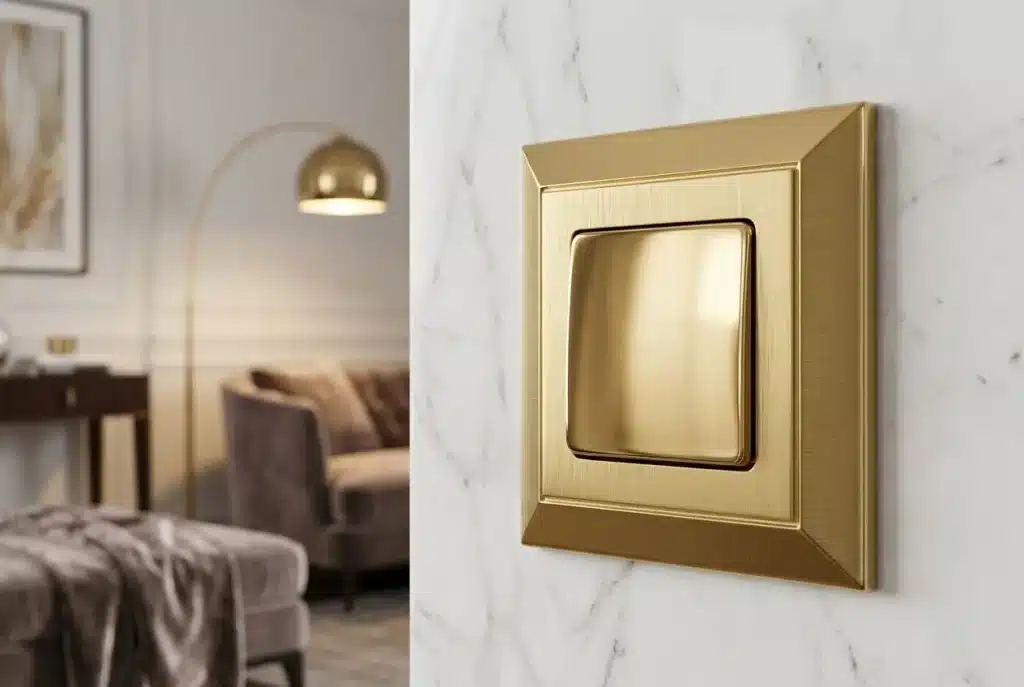
Luxury-quality switches are distinguished by solid brass construction for every element—plates, toggles and rockers—paired with expert European craftsmanship that delivers a satisfying weight and a precise, consistent click. Finishes such as brushed, antique and satin brass resist fingerprinting, age into a natural patina, and hold aesthetic consistency across rooms.
What separates genuine luxury solid brass switches from standard electrical switches comes down to material, build quality and design intent—and that difference is exactly what makes a brass switch worth the investment.
What materials define luxury light switches
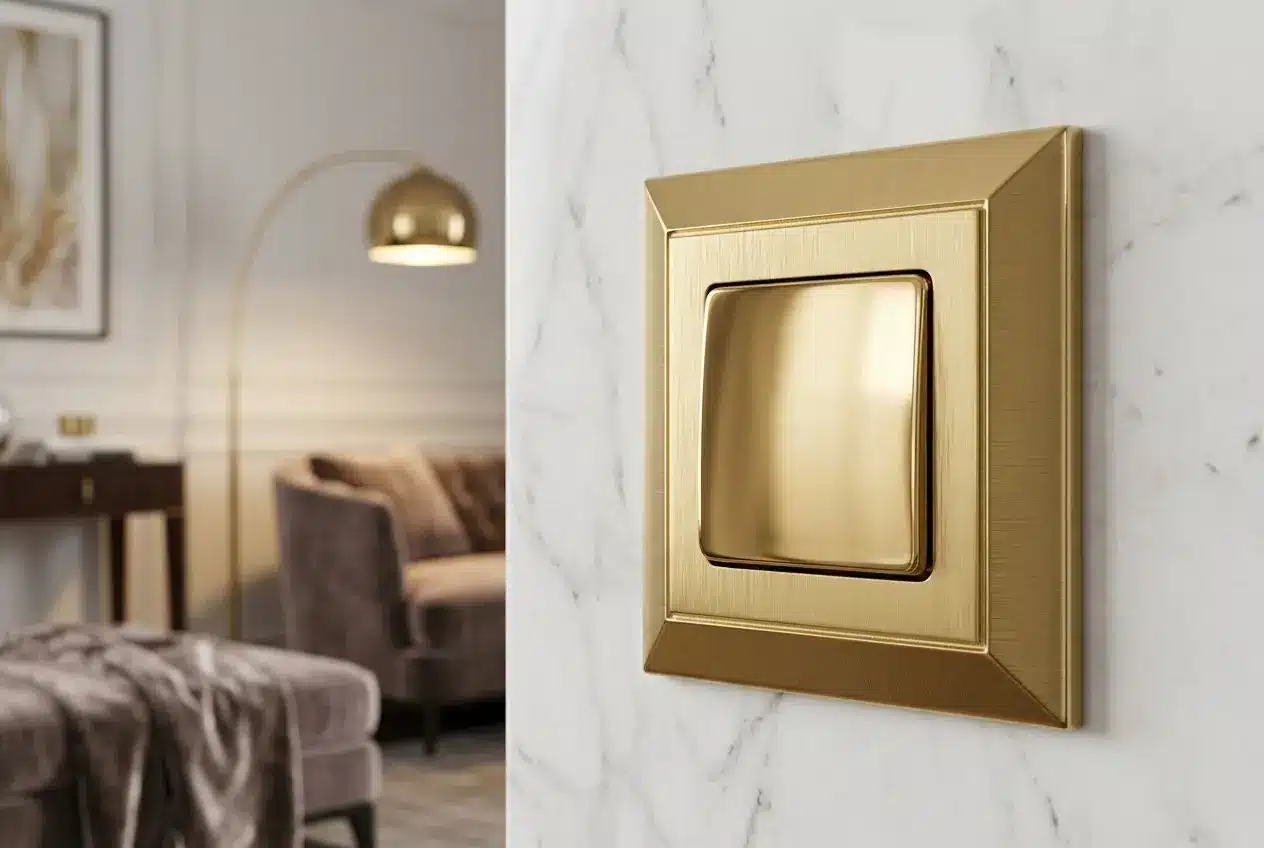
Solid brass at 0.080 inches thick, that’s the first thing you notice when you pick up a genuine luxury light switch. The weight alone separates authentic luxury switches from plastic imitations and cheaply plated counterparts that feel hollow against the hand. Material selection at this level is what mass-produced alternatives simply cannot replicate.
Why solid brass outperforms plastic and plated alternatives
Solid, unplated brass resists corrosion and maintains structural integrity for decades, developing a natural patina that adds character rather than peeling like plated surfaces. High-quality brass displays a rich, warm color and smooth texture; lower-quality brass appears dull and feels rough to the touch. The composition matters: higher copper content produces redder, softer, warmer alloys, while higher zinc content yields yellower, harder variants.
Fine-grained brass enables smoother, more polished finishes and is easier for expert craftsmen to work with during manufacturing, unlike coarse-grained alternatives that compromise final appearance. That’s what gives each brass light switch its refined surface, not a coating, but the material itself.
- Corrosion resistance: Unplated brass naturally oxidizes into a protective patina layer, preventing deterioration unlike plated metals that expose base material when the coating fails.
- Weight and tactile presence: Solid brass construction provides satisfying heft that signals quality through touch, distinguishing luxury switches from lightweight plastic or thinly plated substitutes.
- Longevity of finish: Brass finishes age gracefully for decades, whereas plating chips, peels, and reveals an inferior substrate, requiring replacement.
Place a brass light switch next to a standard switch in white plastic and the difference is immediate, not just visual, but mechanical. A brass toggle switch produces a refined click; a plastic alternative creates a dull, hollow noise that undermines the entire perception of elegance. That single detail is worth more than any brochure claim.
Expert European artisans oversee each production stage from material selection through final polishing, ensuring uniform strength across all components and a refined appearance that automated factories cannot replicate. This human oversight is why handmade brass switches deliver consistency and character that mass production simply cannot achieve.
Premium material variety beyond metal
Luxury light switches extend beyond solid brass construction to embrace diverse premium materials that serve specific interior design intentions. Genuine porcelain plates, glass options in white, black, grey, and brass variants, and high-intensity enamel applied using historic Italian techniques, as featured in the SMALTO ITALIANO collection, demonstrate how artisanal material selection elevates light switches into decorative objects. Alternative premium materials include solid copper, pewter, hand-finished oak, and bakelite for heritage authenticity.
- Genuine porcelain: Creates a ceramic elegance with a smooth, cool tactile feel and a timeless appearance that complements traditional and contemporary interiors alike.
- Glass faceplates: Available in multiple colors, glass provides light-reflective surfaces that add visual depth and sophistication to designer installations.
- High-intensity enamel: Applied using techniques perfected over centuries, vivid enamel colors create statement pieces that function as interior art rather than mere utilities.
- Copper and hammered alternatives: Softer than brass, copper ages distinctly and offers a warmer, more artistic patina development for heritage or eclectic design schemes.
Material variety allows architects and interior designers to specify brass switches, or copper, porcelain, or enamel, that align with broader design narratives, whether heritage or contemporary. The combination of traditional craftsmanship with diverse premium options positions each light switch as an integral design element, not an afterthought.
How artisanal craftsmanship elevates raw materials
Raw brass becomes a luxury product only through meticulous hand finishing by skilled European artisans. Photo-etching transfers designs onto brass sheets using light-sensitive coating and acid precision; hydraulic die stamping forms the switch shape; hand finishing includes trimming, deburring, and meticulous polishing to achieve specific aesthetic outcomes. Each stage demands human judgment that no automated line can substitute.
The difference between factory-stamped and hand-finished surfaces is both visible and tactile, hand-finished textures reveal individuality and intentionality, while stamped surfaces appear uniform and anonymous. Quality inspection of every finished piece ensures that craftsmanship standards remain consistent across entire collections, which is why luxury light switches endure as design investments rather than consumable commodities.
Finish options and tactile feel in light switches
Fourteen distinct finishes span true luxury switch finishes ranges, brushed chrome, polished chrome, black nickel, antique brass, brushed brass, graphite, bronze, brushed steel, polished brass, matte white, matt black, and hand-finished textures, each engineered for specific long-term aesthetic outcomes. Finish choice fundamentally determines how a light switch integrates with surrounding interior design elements, c’est pour ça que the selection is a genuinely architectural decision rather than an afterthought.
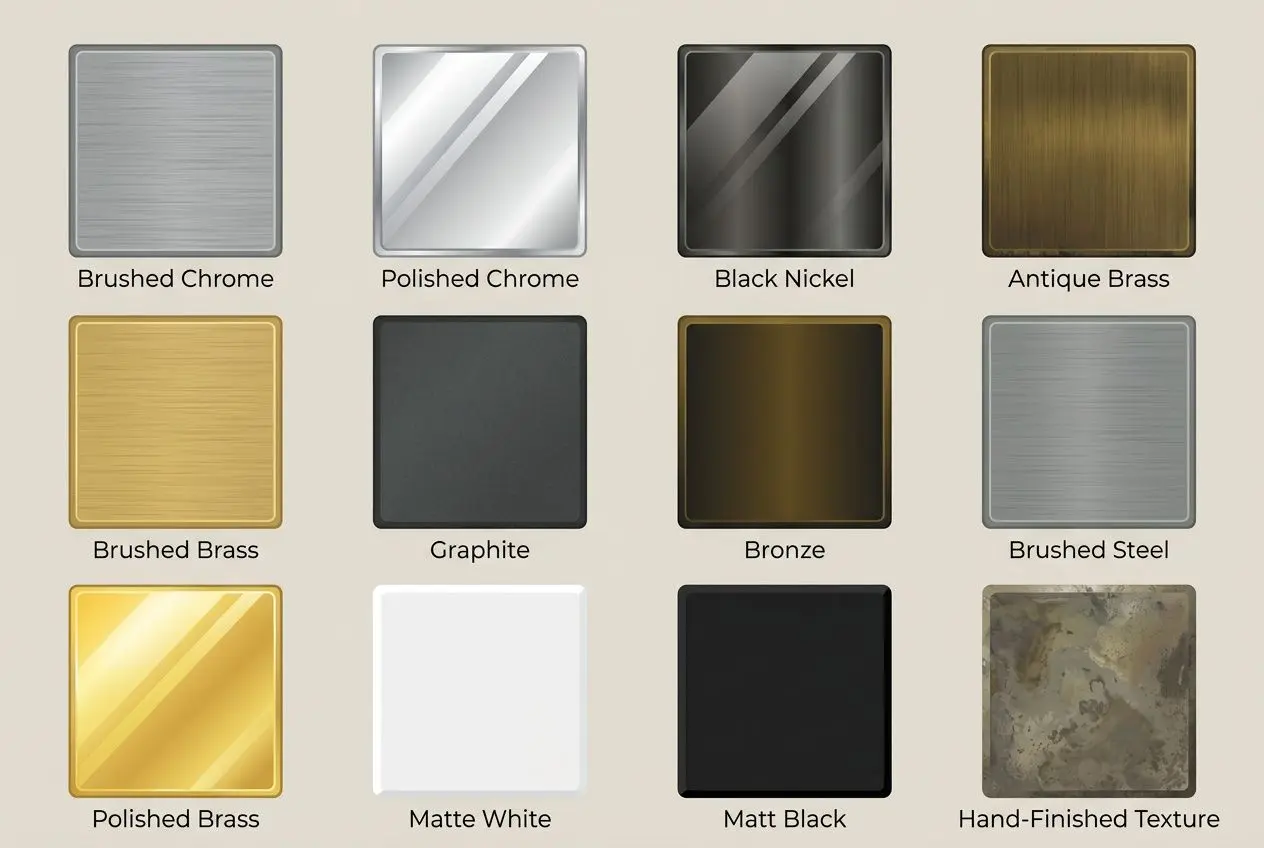
Which finishes suit different interior styles
Antique brass is hand-aged to deep brown with golden undertones and continues developing natural patina over approximately three months of use, ideal for traditional, period, or eclectic interiors where aged character strengthens design narrative. Brushed brass resists tarnishing through engineered treatment, maintaining a warm, muted appearance without visible patina development, which suits modern, minimalist, and transitional spaces. Satin brass remains visually stable without patina formation, offering designers a predictable, timeless long-term aesthetic.
Brass switches universally pair well with wood, stone, marble, plaster, and painted surfaces, their warm, buttery quality creates visual harmony across material combinations. Bronze offers a darker, moodier character suited to vintage or period interiors; black aluminium delivers a sharp, contemporary aesthetic for modern spaces; perspex finishes make switch plates virtually invisible, preserving uninterrupted views of wallpaper or paint. Each brass switch in the range is engineered to hold its finish character over years of daily contact.
- Antique brass for traditional spaces: Hand-aged patina complements Victorian, Georgian, and period-revival interiors where aged authenticity strengthens design coherence.
- Brushed brass for modern eclectic: Tarnish-resistant finish suits contemporary, Scandinavian, and mixed-material schemes where warmth tempers minimalism.
- Satin brass for minimalist interiors: Stable, non-developing finish coordinates seamlessly with contemporary palettes prioritising visual restraint and material honesty.
- Bronze for moody, sophisticated spaces: Darker tone creates subtle drama in jewel-toned or deeply painted rooms, adding depth without visual dominance.
Antique brass against forest green walls creates understated elegance; brushed brass in a Scandinavian scheme provides warmth without distraction; satin brass in a contemporary loft maintains design restraint. The wrong material choice, bright chrome in a traditional cottage, matte black in a light coastal room, immediately signals discord and reduces the perceived quality of the entire interior. One finish decision, one room-wide consequence.
| Interior Style | Recommended Finish | Why This Works |
| Traditional / Period | Antique brass | Hand-aged patina aligns with heritage aesthetic and authentic aged materials |
| Modern / Minimalist | Brushed brass or satin brass | Muted tone provides warmth without visual noise or distraction |
| Contemporary / Urban | Black nickel or polished chrome | Cool metallics complement concrete, steel, and industrial materials |
| Eclectic / Bohemian | Brushed brass or bronze | Warm, aged-feeling finishes support layered, collected aesthetic |
| Luxury minimalist | Satin brass or perspex | Restrained finish allows focus on wall color and architectural simplicity |
How tactile precision defines switch quality
The tactile experience of a luxury light switch extends well beyond appearance into daily sensory interaction. Velvety, silk-smooth finishes, demonstrated by designer collections featuring hand-finished surfaces, deliver a tactile quality that transforms routine use into a moment of refined sensory detail. Premium light switches require precise actuation force, consistent mechanical feel, zero lateral play, and no wobble across every single use.
The click produced by solid brass toggle switch mechanisms must feel refined, not harsh, quality signalled through sound as much as touch. A toggle switch delivers mechanical click and vintage charm suited to traditional interiors; rocker switches offer clean, smooth feel for contemporary spaces. The refined resistance of a luxury dimmer switch, the precise engagement of a brass toggle, the smooth rotation of a knurled dimmer switch knob: these sensory details accumulate into a subliminal awareness of elegance that justifies premium pricing through direct, daily experience.
Why finish coordination matters across a room
Coordinating the finish of switches and sockets, dimmers, outlets, and wall plates across all visible areas, and extending that coordination to cabinet hardware, faucets, lighting fixtures, and door handles, creates the cohesive, intentional look that distinguishes a truly refined interior from an unrelated assembly of components. A single mismatch, brass switches paired with chrome outlets, or satin brass near polished chrome faucets, immediately undermines perceived quality and signals a lack of design intention.
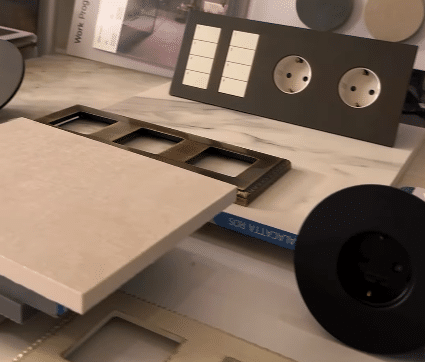
Low-profile flush switch plates blend seamlessly into designer-panelled walls, supporting minimalist interior design sensibilities where the light switch becomes architectural rather than decorative. Paintable switch plates enable complete colour coordination, functioning either as seamless integration or as deliberate statement pieces: brass switch plates against deep blue, forest green, or warm terracotta walls create understated yet precise contrast. This polished coordination across switches and sockets, carried through entire rooms and properties, is what separates a considered interior from one that almost got there.
Designer light switches customization and smart features
Polished brass, refined finishes, high-grade electrical components, luxury light switches are built on material choices that show up in every detail. The craftsmanship behind each light switch elevates it from a simple control into a decorative element that holds its place in both residential and commercial interior design. Customization is what turns a switch plate into something specific to an architectural vision rather than a generic product off a shelf.
Bespoke options for exclusive interiors
Designer light switches available through bespoke services let architects specify materials, finishes, plate styles, engraving, paintable plates, fabric tapestry customization, and custom RAL hues, every detail resolved before installation. The Belle Époque collection takes this further: its brass switch plates accept customizable fabric tapestries, turning the switch plate into textile artwork coordinated with upholstery, curtains, or wall coverings. Luxury interiors demand that elegance extend to every surface, and a light switch chosen from a limited retail range rarely meets that standard.
- Custom RAL color specification: Any RAL hue can be applied, allowing switches to match wall colors, accent materials, or designer-specified color palettes with precision.
- Fabric tapestry customization: Coordinating switch plates with textiles creates layered, curated interior narratives where electrical elements enhance rather than interrupt design schemes.
- Engraving and personalization: Custom engravings, initials, or dates transform switches into memento-quality pieces for significant residential or commercial projects.
- Limited-series production: Boutique hotels, luxury residential developments, and listed building restorations require exclusive switch designs unavailable through standard retail channels.
Available configurations span 1-gang, 2-gang, 3-gang, and 4-gang groupings, combined with compact mechanisms that enable high-density switch designs while keeping plate dimensions consistent. Plate varieties include traditional rectangular formats, minimalist streamlined profiles, screwless magnetic mounting systems, and panel-mounted flush integration. That dimensional flexibility means any spatial requirement is met without sacrificing visual coherence across a property.
Modern functional features in luxury switches
Functionality follows the same logic as aesthetic here, nothing is bolted on as an afterthought. Premium dimmer switches feature smooth rotary mechanisms with precision knurled knobs, delivering tactile engagement that matches the refined finish of the surrounding brass switch frame. Built-in USB and USB-C charging outlets integrate within those same frames, maintaining a unified look across every switch and socket installation on the wall.
LED bulb compatibility is what separates genuine luxury switches from aesthetic-only solutions: modern luxury dimmer switches are engineered specifically to work with LED lighting without flicker, noise, or performance loss. Touch dimmers with hotel-card or Bluetooth smart control integration bring contemporary convenience to surfaces hand-finished by artisans from solid brass, so the dimmer switch is as refined in use as it is to look at. Multiple socket types, classic double sockets, USB variants, USB-C options, are available in matching finishes, ensuring every outlet on the wall coordinates both visually and functionally within the broader interior design scheme.
How flush and panel designs serve minimalist spaces
Minimalist interiors need a light switch that either disappears entirely or reads as a deliberate architectural statement, never as visual noise cluttering a clean surface. Low-profile flush plates blend into designer-panelled walls, supporting the principle that architectural surfaces should remain uninterrupted by electrical fixtures. Panel-mounted flush integration lets switches sit recessed within the wall, removing any protruding plate that would break the linear aesthetic central to minimalist design.
Perspex finishes make luxury light switches virtually invisible, preserving uninterrupted views of wallpaper or paint color while maintaining full functionality, the right choice when a specific texture or hue is the point of a wall. Paintable switch plates go further, matching wall surfaces so precisely that the light switch recedes from attention during normal room use. Both solutions serve architects who need the switch plate to coordinate with the room rather than compete with it.
Screwless magnetic mounting systems eliminate visible fasteners, reducing visual clutter and reinforcing the seamless surfaces that define restrained interior design. Available in 1-gang through 4-gang configurations, these systems maintain a consistent profile regardless of switch density, handling complex electrical requirements without multiplying distraction. For architectural projects where design purity is the brief, these near-invisible switch solutions represent the clearest expression of what luxury light switches can do: functional excellence with absolute aesthetic control.
Frequently Asked Questions
What distinguishes luxury switches from standard electrical switches?
Luxury switches use solid brass construction throughout every component, with hand-finished surfaces by expert European artisans and consistent actuation force with zero lateral play. A standard switch relies on plastic or thinly plated materials, no meaningful weight, visible wear within months, and a hollow tactile experience that signals cheap assembly immediately.
Material quality, craftsmanship, and finish durability are what separate genuine luxury switches from mass-produced electrical switches. The price difference is real, so is the gap in sensory and functional longevity.
Are expensive light switches actually worth the investment?
For high-end residential projects, boutique hotels, or listed building restorations, a luxury light switch visible dozens of times daily delivers compound value: refined materials, precise mechanical feel, and visual elegance that outlast cheaper alternatives by decades. Where interior design precision defines the space, these light switches become structural elements, not optional upgrades.
For modest residential updates or commercial spaces where electrical switches go unnoticed, a commodity alternative suffices. The distinction is architectural intent: when the switch plate is part of the design language, the material and aesthetic investment is justified.
What should you look for when selecting a designer switch for your interior?
Start with solid brass construction, verify it through material specifications, not marketing copy. Match the finish to surrounding metals using a clear principle: antique brass for traditional interiors, brushed brass for modern spaces, bronze for moodier, darker schemes. Test the tactile experience in person when possible, evaluating click mechanism, lever resistance, and surface smoothness.
Confirm that customization options cover your specific architectural requirements, configuration sizing from 1-gang through 4-gang, plate style variety, and matching sockets and dimmer switches. Check LED dimmer switch compatibility directly with the manufacturer before finalising your selection.