
Contemporary light switches and sockets buying guide
15 May 2026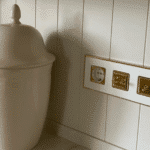
Premium decorative wall switches: best light switches to buy
19 May 2026Elegant switches for home design are mechanisms that typically add 400 grams per gang in solid brass, demanding specific wall anchors on hollow partitions. This guide outlines the dimensional tolerances, material behaviours, and switch configurations that separate a durable specification from a standard one. It provides the criteria to select stylish light switches capable of holding their mechanical integrity over twenty years.
Why designer light switches elevate home interior design
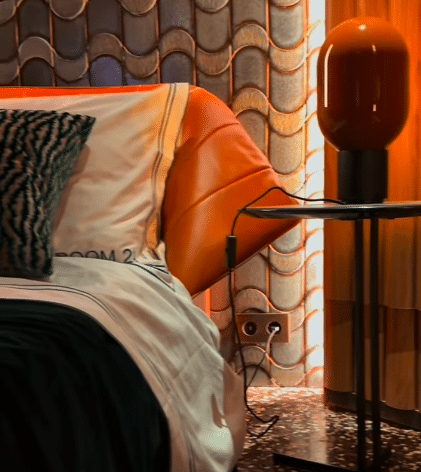
The light switch is the primary point of tactile contact within a room’s architecture. Specifying switches for home environments without accounting for backplate dimensions invariably produces visual interruption. Integrating designer light switches with intention—specifying a dark finish against charcoal joinery, for instance—anchors the design scheme from the outset.
Choosing the right light switch finish for your space
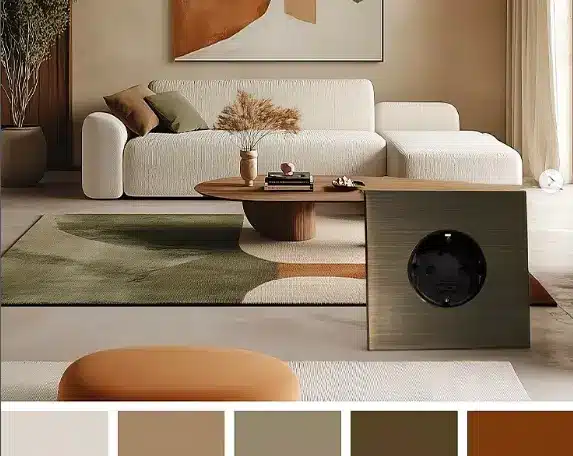
Selecting between finishes such as brushed chrome, black nickel, or antique brass is a precise specification decision, not a stylistic afterthought. The surface treatment either grounds the room’s tonal palette or creates an unintended focal point. I would specify brushed brass where material warmth is a structural requirement of the brief.
- Warm metallic finishes: Options such as brushed brass suit period properties where the brief demands natural material ageing over time.
- Cool metallic finishes: A brushed chrome or black nickel plate reads cleanly against dark architectural detailing without introducing ambient glare.
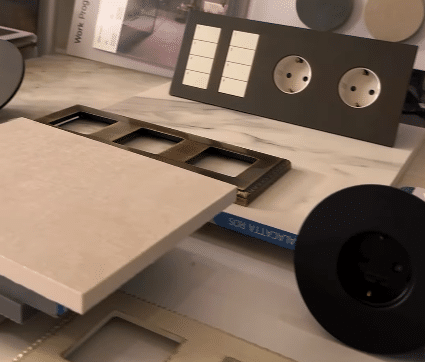
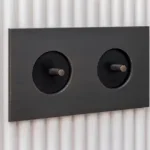
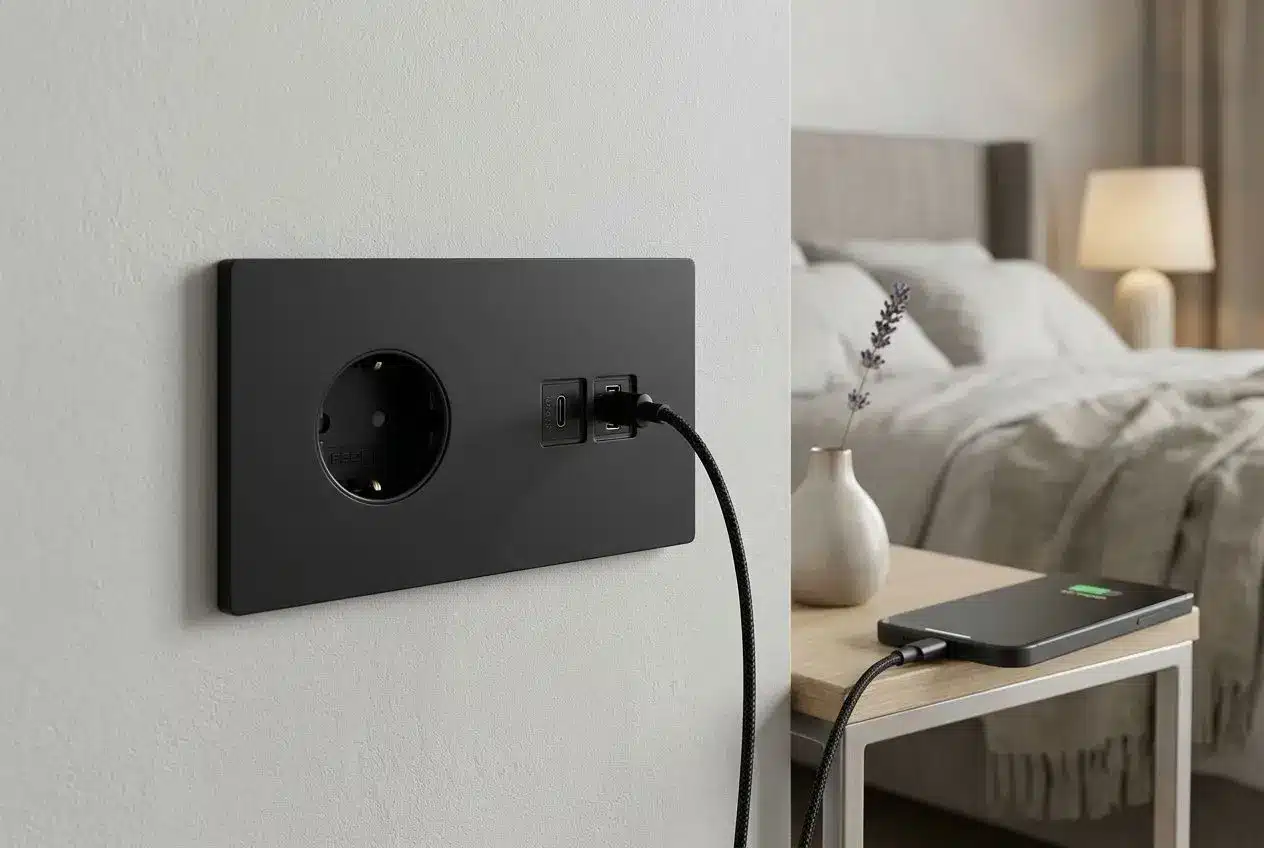
- Matte surfaces: Specifying matt black sockets in high-contrast interiors creates a deliberate architectural division rather than a passive background element.
Surface oils transfer more readily onto polished metal than onto textured variants. For corridors or kitchen entryways, I would specify brushed frames over polished ones to reduce maintenance demands. The decision turns entirely on daily handling frequency rather than aesthetics alone.
Porcelain and antique brass as premium material choices
Solid porcelain provides a dense, cool tactile register that standard resin constructions cannot replicate. When specifying luxury light switches for dressing rooms, this density communicates immediate structural quality. It is a designer specification that justifies its placement through physical touch alone.
Unlacquered antique brass darkens unevenly around the toggle, confirming the authenticity of the alloy. Where a project brief requires uniform patination over decades, decorative switches in a lacquered format remain the practical recommendation. The choice depends entirely on whether the client accepts natural oxidation as part of the finish.
Screwless and flush designer switches for a refined look
Exposed fixing screws disrupt the visual continuity of high-specification wall finishes. A screwless magnetic plate eliminates this interruption, securing the fascia flush against the backplate. This precise alignment is what distinguishes premium decorative light switches from standard retrofitted hardware.
Flush integration requires close coordination between the electrical contractor and the plasterer at the first-fix stage. Recessing black sockets directly into masonry demands exact dimensional tolerances. Specifying this detail early prevents retrofitting complications and ensures a seamless surface transition.
The Italian enamel switches from the Smalto Italiano range bond vivid pigmentation directly onto brass hardware. This traditional European enamelling achieves a surface depth that standard industrial coatings cannot match. For environments treating light switches as primary decorative elements, this collection remains my standard specification.
Where a specification demands strict material rarity, the crystal luxury switches of the Crystal De Luxe line embed Swarovski crystals into a solid brass chassis. These units function as robust mechanical interfaces while presenting as detailed hardware objects. Concretely, they bridge technical functionality and bespoke ornamentation within a single plate.
Projects featuring bespoke wall treatments often require exact material matching at the plate level. The luxury decorative switches within the Belle Époque series permit custom tapestry inserts within a brass surround. This configuration allows the light switch to integrate honestly into complex interior schemes without compromising the surrounding finish.
FEDE’s luxury light switch collections redefine design
Cast brass for ornamentation requires different tolerances than standard stamped metal components. Fede Switch & Light applies this specific manufacturing logic directly to their electrical ranges. Concretely, finish depth and material weight are treated as foundational criteria rather than applied styling, producing luxury light switches with absolute structural integrity.
Smalto Italiano: Italian enamel meets designer light switches
True Italian enamel requires multiple high-temperature firings to achieve structural surface stability. Master artisans apply this technique directly onto solid brass hardware to produce these designer light switches. The resulting colour saturation cannot be replicated by standard painted finishes.
- TOSCANA: Warm, earth-toned enamel finishes that directly reference central Italian architecture. I would specify this palette for residential spaces built around natural material schemes.
- SIENA: This variant carries deeper, highly saturated enamel tones. I would specify SIENA in a dedicated study where the light switch must register as an independent decorative object.
- FIRENZE: This finish integrates graphic enamel patterns drawn from historic decorative arts. The specification makes sense when the brief strictly demands artisanal intervention on every architectural surface.
In practice, fired enamel on brass will not degrade under daily mechanical handling. Colour vibrancy remains materially identical at year one and year twenty. I would specify this finish when selecting designer sockets for projects that demand permanent decorative longevity.
Crystal De Luxe and the jewel light switch concept
A mechanism framed by Swarovski crystal addresses a precise architectural requirement: surfaces calling for accent objects rather than coordinated blends. Fede Switch & Light integrates these precision-cut stones into solid brass backplates. The resulting designer sockets and switches merge functional electrical engineering with established silversmithing techniques.
Five distinct configurations exist: SAND, DÉCOR, ART, VELVET, and REAL GOLD. The REAL GOLD variant features a 24-carat plated frame, while VELVET couples darker crystals with brushed brass. The decision turns entirely on ambient room lighting: highly reflective crystal settings demand directional illumination rather than diffuse overhead sources.
The point of physical contact carries a distinct material register. A crystal-set toggle mechanism delivers the exact same electrical tolerance as standard designer light switches. I would specify this configuration for dressing rooms where tactile differentiation holds genuine value on the specification sheet.
Belle Époque: customisable designer switches for bespoke interiors
Integrating an electrical mechanism into a continuous wall treatment requires precise material matching. The Belle Époque collection pairs solid brass framing with interchangeable inserts in metal, timber, or porcelain. This approach allows the designer to continue the room’s primary architectural texture without visual disruption.
Paintable cover plates offer further control over the final installation geometry. Concretely, matching the mechanism surround to the exact wall tone allows the hardware to recede completely into the background. For briefs requiring bespoke integration, this collection of luxury light switches remains the most logical technical starting point.
How to choose and configure elegant light switches
A standard 86mm backplate accepts a range of mechanisms, yet the specification of gang count and finish determines how premium switches integrate into a room. I would advise assessing light switches and sockets alongside their material maintenance requirements, sequentially, before finalising any electrical plan.
Switch types and gang configurations for every room
Contemporary light switches and sockets deliver precise functional options that go well beyond standard catalogue limits. Toggle switches command a specific architectural presence suited to heritage spaces, while rocker switches offer a lower-profile alternative. The mechanical character of every light switch demands deliberate specification rather than default selection.
- Toggle switches: a solid brass lever mechanism with vertical travel defines this choice; I would specify it to ground transitional interiors with deliberate mechanical feedback.
- Rocker light switches: flat paddle mechanisms provide low-profile operation; these modules suit contemporary schemes where the hardware must recede visually.
- Dimmer switches: a knurled rotary mechanism allows exact voltage control; specify a standard dimmer switch for accent lighting circuits that demand variable intensity.
- Smart dimmer switches: these modules embed digital scene-setting protocols behind traditional solid plates; I would advise this specification for homes requiring advanced control systems.
Gang configuration must follow room functionality directly, rather than aesthetic preference alone. Consolidating circuits onto a 4-gang plate at a bedroom entrance reduces wall clutter. For bedside applications, a single-gang plate maintains a tighter, more intentional design focus.
| Switch type | Aesthetic register | Recommended interior context | Key specification criterion |
| Toggle | Heritage, transitional | Victorian hallways, period properties, farmhouse interiors | Lever travel and backplate depth |
| Rocker | Contemporary, minimal | Modern apartments, minimalist schemes | Paddle profile and flush fit |
| Rotary / dimmer | Classic, refined | Living rooms, dining rooms with accent lighting | Dimming range and circuit compatibility |
| Smart dimmer | Modern, integrated | Connected homes, multi-room control systems | Protocol compatibility and plate finish match |
Matching designer sockets and switches for a cohesive look
Modern light switches and sockets specified with identical backplate finishes ensure strict architectural cohesion. Placing brushed brass next to standard white plastic immediately fractures the visual language of a room. By specifying matching designer plug sockets, any jarring hardware transition is eliminated entirely: a designer plug and its adjacent plug sockets must share the exact same metal.
Fede Switch & Light engineers precise finish matching across designer sockets and switches to guarantee a continuous material language throughout a property. That level of visual coherence is what distinguishes a considered specification from a loosely assembled hardware schedule. Whether the choice falls on white glass, black sockets, brushed chrome, or solid bronze switches, the integration remains consistent throughout.
Practical tips for antique brass and metallic finish care
Unlacquered antique brass darkens through oxidation within twelve to eighteen months, beginning at the mechanism contact points. Where a brief demands strict uniformity over time, I would specify a lacquered finish from the outset. Applying lacquer retroactively to a patinated plate will not recover the original milled brass tone.
High-gloss finishes capture fingerprints faster than textured metal variants: this is what is often observed in high-traffic corridors. I would advise reviewing maintenance protocols before specifying highly polished light switches and sockets in those areas. Gentle cleaning with a microfibre cloth protects these surfaces; abrasive compounds permanently degrade the protective lacquer.
Specifying copper light switches or raw brass modules means accepting that the surface will develop a distinct working patina over time. For projects requiring absolute finish stability, designer sockets in matte tones offer a more defensible solution. The decision turns on whether the client regards natural metal ageing as a material asset or a maintenance liability.
Frequently asked questions
What finishes are available for premium light switches and sockets?
Concretely, the Fede Switch & Light catalogue offers fourteen distinct finishes across its range of premium light switches. The options include brushed chrome, black nickel, antique brass, brushed brass, and white glass, all available in coordinated plate formats. Materials extend further to solid brass, porcelain, and crystal.
I would specify the finish based on tonal requirements, maintenance regimens, and whether a patina effect is desirable over time. The decision for these light switches and sockets ultimately turns on your specific project brief.
How do I choose stylish light switches to match my home décor?
Warm metallic tones suit heritage renovations; cool finishes naturally align with minimalist architecture. Incorporating matt black sockets establishes a deliberate contrast within dark-toned spaces. In practice, black sockets carry a very specific graphic weight that other finishes do not replicate.
Decorative light switches from the Belle Époque collection are designed to function as focal points rather than recessive plates. For any stylish light switch, the finish choice should follow the room’s logic: it never precedes it.
What are designer switches and sockets, and are they worth specifying?
Designer switches and sockets are electrical mechanisms engineered from solid materials with hand-finished surfaces. What changes here is that decorative switches operate simultaneously as precise working mechanisms and considered architectural details: the two functions are inseparable.
Specifying these designer light switches is rigorously justified when finish longevity and design coherence are non-negotiable parameters in the brief. In high-end residential contexts, those two criteria consistently drive the specification toward this category.