
How to hide plug sockets in kitchen: 10 clever ideas
22 June 2026
How to hide plug sockets in your living room: 10 clever ideas
23 June 2026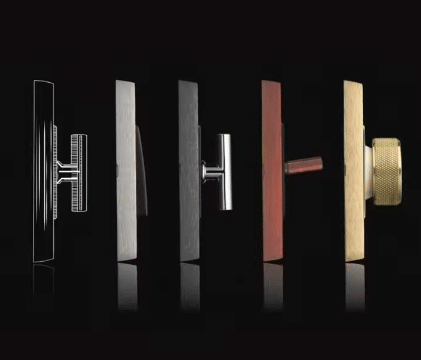
Brushed brass sockets represent one finish category where the manufacturing process directly determines the visual outcome. Mechanical abrasion intentionally breaks the plated surface to diffuse ambient light, producing a directional grain and a matte quality that polished brass cannot replicate. This reference examines finish tolerances, component types, and the specification of a cohesive suite across both switches and sockets.
Brushed brass sockets and switches: everything you need to know
Concretely, the difference between a well-specified fitting and a compromised alternative comes down to base material. The depth of the brushing process and visual uniformity across every room plate dictate the final result. Evaluating these technical parameters before procurement protects the long-term integrity of brushed brass sockets and switches.
What sets brushed brass apart from other brass finishes?
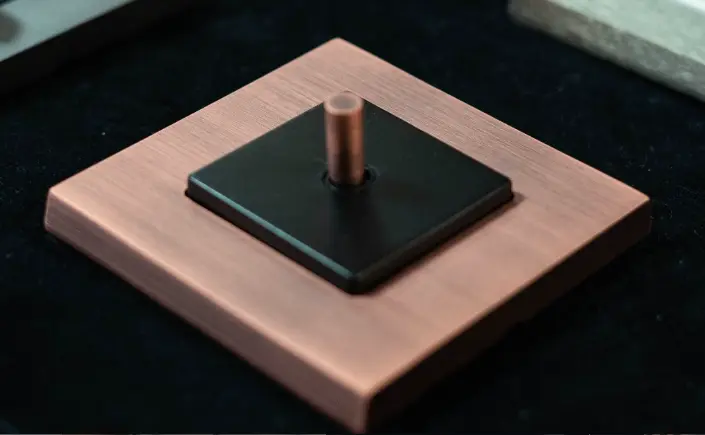
In practice, brushed brass sockets occupy a specific tolerance band between highly reflective metal and the oxidized patina of antique brass. The abrasion process draws a fine abrasive across the plating, establishing a directional texture that scatters incident light. That deliberate intervention yields warm brass tones characterized by architectural restraint rather than period gloss.
The functional advantage of this brass finish is its inherent resistance to visible handling marks. On a rocker switch or a high-traffic plate handled daily, this material property matters considerably for maintenance. Satin finishes are frequently conflated with brushed variants, but a true satin surface presents a chemically smoothed profile with no perceptible grain.
- Polished brass provides a sharply reflective surface suited to classical schemes requiring high light contrast, though it readily exposes daily handling marks.
- Satin brass occupies the visual space between polished and brushed reflectivity, yielding a smoother surface with a marginally cooler temperature than a true brushed texture.
- Antique brass relies on accelerated oxidation to create surface variation, a specification suited strictly to projects demanding an established artisan character.
- Brushed gold applies equivalent abrasion techniques but introduces a decidedly yellower saturation than warm brass, making it an entirely separate specification choice.
When a project brief calls for the subtle presence of warm brass tones without excessive visual noise, brushed remains the most defensible specification. The surface matures gradually, acquiring character around the toggle switch or plate edges without rapid oxidation. I would specify brushed plates over polished alternatives wherever natural stone or timber elements share the immediate wall plane.
Which product types are available in brushed brass?
A rigorous room specification demands absolute finish consistency across every installed electrical mechanism. Manufacturers ensuring continuity supply brass sockets and switches spanning from standard 13A units to rotary dimmer switches and light switches. A complete catalog invariably includes USB sockets, a dedicated shaver socket, and an unswitched socket rated at 5A, all maintaining a uniform aesthetic standard.
Multi-gang configurations accommodate dense electrical demands along kitchen worktops without compromising the selected finish. A screwless backplate option exists for precise installations where visible fixings would disrupt the architectural composition. Integrated device plates feature dual Type A and Type C connections; verifying their 5V DC 4.0A shared capacity against client charging requirements remains an essential step.
| Product type | Key specification detail | Configuration options |
| 13A switched socket | Available with black or white insert detail | 1G, 2G, 3G, 4G |
| USB socket | Type A + Type C, 5V DC 4.0A shared | 1G, 2G |
| Dimmer switch | 5–150W LED / 10–200W incandescent, 2-way | 1G, 2G |
| Toggle switch | Single pole, 2-way, intermediate options | 1G, 2G, 3G |
| Shaver socket | Dual voltage 115/230V, black insert | 1G |
| Unswitched socket | 5A rating for lower-amperage applications | 1G |
| TV / media outlet | Maintains brushed brass finish consistency | 1G, 2G |
| Blank plate | Matches faceplate finish exactly | 1G, 2G |
How do brushed brass sockets fit different interior styles?
The visual weight of brushed brass sockets shifts considerably depending on adjacent wall materials. Positioned against natural masonry, the metal reads as an honest material extension rather than a superimposed decorative element. Against deep architectural paint tones, the brass finish establishes a clear contrast without dictating the room’s overarching scheme.
Within minimalist environments, successful specification depends on strict restraint regarding plate dimensions and gang density. A single-gang fitting on bare plaster appears highly intentional; an oversized multi-gang unit quickly overwhelms a narrow structural partition. Ensuring that brass switches share the exact visual language as the neighboring sockets and switches produces an architecturally embedded result.
Which collections offer the best brushed brass sockets?
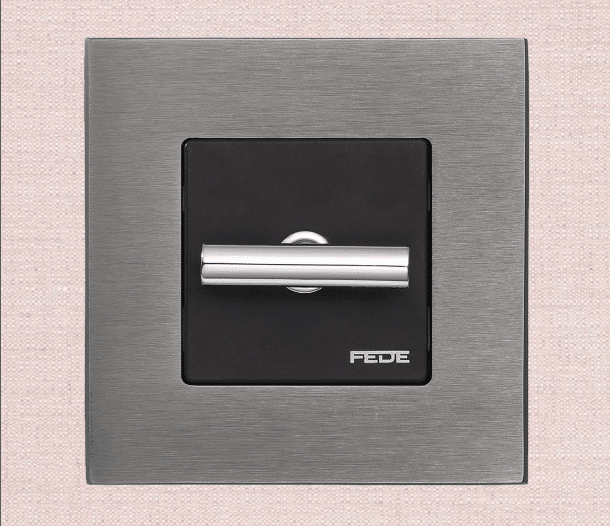
For Fede Switch & Light, two distinct collections address this requirement through entirely different formal languages. The brushed brass sockets within the SoHo Collection use a solid brass foundation, with a surface executed to maintain exact texture depth. This suite incorporates broad multimedia formats alongside tactile rotary mechanisms, making it a capable specification for complex residential frameworks requiring full switches and sockets coverage, including polished brass alternatives within the same range.
When an architectural brief demands strict minimalism, the brushed brass sockets of the Barcelona Collection deliver a demonstrably leaner backplate profile. Embedded signaling LEDs within the rotary mechanisms resolve technical wayfinding requirements without compromising formal sobriety. I would specify the Barcelona range for contemporary spaces using neutral palettes, reserving the SoHo Collection for environments where the hardware must carry distinct decorative weight, particularly where brushed brass sockets and switches need to hold their own against richly textured surfaces.
Frequently asked questions
What is the difference between brushed brass and antique brass sockets?
Brushed brass sockets are produced by mechanically abrading a plated surface, which creates a matte, directional texture with warm brass tones. Antique brass, by contrast, introduces deliberate oxidation and tonal variation across the backplate, resulting in a noticeably darker appearance. I would specify the antique brass finish for heritage interiors, as these two finishes respond entirely differently under identical lighting conditions.
Are brushed brass sockets compatible with standard wiring configurations?
The selected brass finish has no bearing on wiring compatibility. Concretely, solid brass plates accept standard wiring configurations, provided the electrical rating aligns with the circuit design. What changes here is the rated amperage: 13A for standard brass sockets, or 5A for an unswitched socket on a dedicated lighting circuit, verify this before ordering.
How should brushed brass sockets be maintained to preserve the finish?
In practice, brushed brass sockets require no specialist treatment under normal residential conditions. Wipe the plate with a dry cloth to protect the brushed texture; abrasive cleaners will create uneven reflectivity across the surface and should be avoided. This material naturally develops a warm brass patina through handling, which makes it a defensible specification for high-traffic environments.