
Luxury light switches: a step-by-step guide to installation
19 June 2026
Brushed brass sockets and switches: a complete buying guide
22 June 2026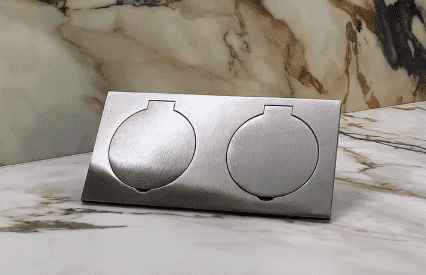
Plug sockets are indispensable, yet their visual impact can weaken an otherwise resolved scheme. The right choice when planning a kitchen socket layout is to treat every outlet as part of the architecture, selecting architectural plug sockets that sit naturally within the wider décor.
10 Clever ways to hide plug sockets in your kitchen
Pop-up and flush-fit socket solutions for worktops
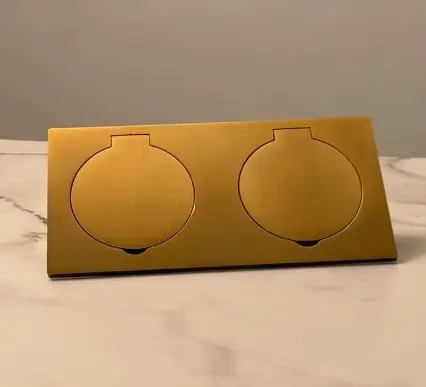
That principle becomes especially important at the worktop. Kitchen worktop sockets are most discreet when they sit flush or retract fully, and a pop-up socket achieves both: it is set into the surface, rises only when needed, and closes away once use is complete.
Beyond this, some models allow an appliance to remain connected within the unit, so power stays available without leaving the outlet exposed. Motorised versions suit islands particularly well, disappearing cleanly between preparation tasks; install a pop-up socket during the initial fit-out where possible, since retrofitting into a finished worktop demands precise cutting and careful protection of the surface.
Under-cabinet and concealed placement ideas
Once selected, the format of the socket leads naturally to placement. Some of the most effective kitchen plug socket ideas rely less on disguise than on sightlines: a strip fixed underneath wall cabinets, for example, keeps power close at hand while staying out of view from across the room.
- Under-cabinet strip: A slim strip fitted underneath wall cabinets keeps cabling off the splashback and outlets out of the primary sightline, with power remaining immediately accessible at counter height.
- Breakfast bar placement: Hidden outlets set underneath a bar overhang create a practical charging point, with cords falling neatly below the eyeline.
- Corner cover: A kitchen socket placed into a corner becomes far less prominent, particularly when a chopping board or everyday accessories provide visual cover.
- Inside cupboards: Plug sockets installed inside cupboards or behind fixed appliance housing keep the functional points within joinery rather than across visible surfaces.
Worth specifying here: placement remains subject to UK electrical guidance, including a minimum distance of 600 mm from the sink and 300 mm from hobs or ovens. An electrician should confirm the final position, especially where tiles, a splashback, or moisture are involved.
Matching finishes so sockets blend into the kitchen
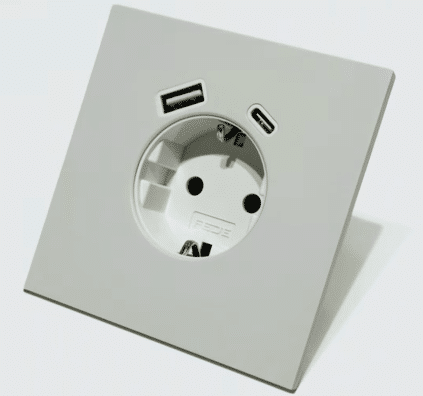
The finish determines whether an outlet recedes quietly or becomes part of the decorative composition, which is why decorative kitchen sockets are often specified for contemporary and heritage-led interiors alike.
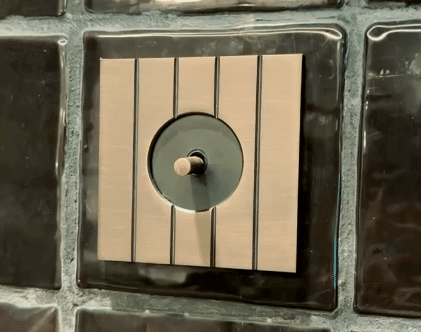
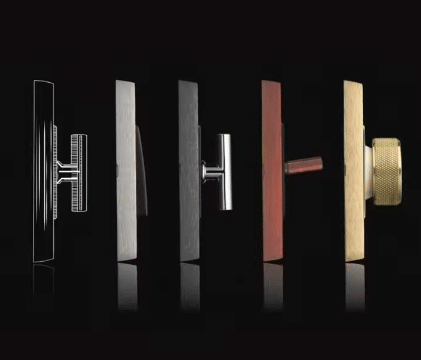
Matt black suits schemes where the outlet should visually withdraw; daily handling benefits from a surface that softens fingerprints. In contrast, satin brass and antique copper sit comfortably with cream cabinetry, deep blue joinery, and layered hardware palettes, finishes that FEDE Switch & Light executes through hand-finished precision rooted in Spanish artisan manufacture.
Paintable sockets provide another route: a paintable faceplate can be primed and finished to match the wall or surrounding surface so the outlet appears almost to vanish. The distinction lies in restraint, with the finish chosen to support the room rather than interrupt it.
| Finish | Best suited to | Concealment quality |
| Matt black | Modern, industrial kitchens | High; absorbs light and softens fingerprints |
| Satin brass | Traditional and transitional schemes | High; blends with warm hardware tones |
| Brushed chrome | Minimal and contemporary kitchens | Medium-high; recedes against cool surfaces |
| Antique copper | Dark cabinetry, heritage kitchens | High; integrates with layered material palettes |
| Paintable white | Neutral or painted wall surfaces | Very high; disappears against matched wall colour |
Appliance garages, in-drawer and decorative concealment
Once finishes have been considered, cabinetry offers the next level of discretion. An appliance garage places the outlet at the back of a dedicated cupboard: small appliances remain ready for use, and cords stay entirely out of sight when the doors are closed.
Provided that heat is managed correctly, this is one of the most effective ways to hide plug sockets in kitchen storage areas. Hot equipment should never run in an enclosed compartment without ventilation, so the doors must remain open during use.
- In-drawer power station: A charging drawer hides cables, devices, and accessory cords beneath the worktop, away from steam and splashes.
- Appliance garage outlet: A socket placed at the back of a pantry or appliance cupboard keeps the power point hidden when the appliance is not in use.
- Decorative hiding: A chopping board, ceramics, or a grouped arrangement can conceal sockets without blocking access entirely.
- Decorative socket design: FEDE Switch & Light offers brass socket designs with hand-finished detailing and enamel surfaces, allowing hidden outlets to read as part of the interior composition rather than as exposed utility.
In practice, the most successful schemes combine several of these approaches: a pop-up socket for the island or main preparation zone, a strip underneath cabinetry, and carefully chosen finishes for any outlet that must remain on a visible wall.
Beyond individual techniques, the result in every case depends on disciplined placement and a precise reading of how power is used within the room, whether that means a concealed outlet within joinery, a paintable faceplate on a tiled splashback, or a flush socket set into the worktop surface.
Frequently asked questions
What is the most effective way to hide plug sockets in a kitchen?
The most effective method depends on the kitchen layout. For an island or uninterrupted worktop, a pop-up socket offers the cleanest result for an appliance used only from time to time: once closed, the power point disappears entirely between uses.
Where plug sockets sit on visible walls, the distinction lies in finish rather than physical hiding. Matt black, brass, or paintable sockets selected to match cabinetry, tiles, backsplash, or wall colour reduce visual interruption, while a flush plate keeps the line neat. In practice, the most convincing way to hide plug sockets combines discreet placement with an aesthetic that belongs to the wider décor.
Can I install a pop-up socket in an existing kitchen worktop?
It is possible to install a pop-up socket in an existing worktop, provided that the surface can be cut with precision and the electrical connection is carried out professionally. The cutout must be routed to exact tolerances, the unit must sit flush with the surface, and all cabling beneath must meet UK regulations.
Once selected, the worktop material affects the complexity: stone and solid timber call for specialist tooling, whereas laminate is usually more straightforward.
Are there design-led socket options that conceal themselves through appearance rather than hiding physically?
Beyond this, the finish determines how quietly the fitting sits within the room. Solid brass or hand-finished models, including those produced by FEDE Switch & Light, can be specified to coordinate with cabinet hardware, lighting, and architectural details; equally, paintable sockets can blend into surrounding surfaces, while tones matched to tiles or the backsplash soften their presence within the décor. This is the right choice when structural work is limited but the kitchen aesthetic still calls for the heritage-led refinement associated with a Spanish artisan manufacturer.