
Luxury switch installation and placement: a complete guide
17 June 2026
Luxury light switches: a step-by-step guide to installation
19 June 2026
Choosing between brushed chrome sockets, polished brass, and satin finishes calls for clarity on both performance and appearance.
Brushed chrome sockets: double the style, lasting performance
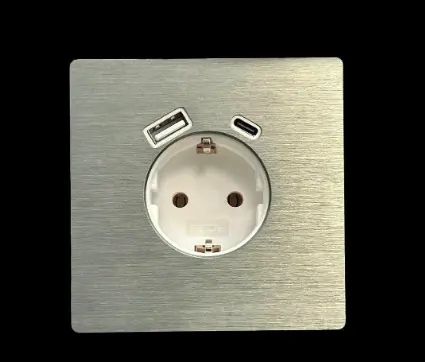
The distinction lies in the making of brushed chrome sockets: once the metal plate has been electroplated, fine directional brush marks are applied across the surface to create a restrained, matt character that polished finishes do not offer. For projects considering brushed chrome sockets, the result is a finish designed for corrosion resistance and visual stability, without the patina associated with some other metals.
Brushed chrome vs polished chrome: which finish suits your space?
That surface treatment shapes the visual register of the room. Brushed chrome reads cooler and more architectural, while polished chrome brings a brighter, more reflective presence that often sits more comfortably in traditional or transitional schemes.
In practice, brushed chrome softens ambient light rather than throwing it back into the space. The finish determines day-to-day appearance as much as style: fingerprints and small marks remain less visible, and routine cleaning is simpler than with polished chrome.
- Fingerprint resistance The directional matt surface disguises fingerprints and minor blemishes far better than polished chrome, especially in high-touch areas above worktops.
- Surface durability Authentic electroplated construction on a solid metal plate resists tarnish, corrosion, and scratching more effectively than spray-coated alternatives.
- Interior register Brushed chrome suits minimalist and contemporary rooms with ease; polished chrome switches tend to support period-informed or transitional interiors more convincingly.
| Property | Brushed chrome | Polished chrome |
| Surface character | Cool, directional matt | High-shine, reflective |
| Fingerprint visibility | Low | High |
| Interior register | Contemporary, minimalist | Traditional, transitional |
| Maintenance requirement | Low | Moderate to high |
| Patina development | None, finish remains stable | Minimal with care |
Double gang and single plug sockets: choosing the right configuration
Once the finish is settled, the configuration becomes the next technical decision. A single socket in a 1-gang format (87mm × 87mm) suits restrained positions such as joinery, bedside panels, or concealed locations behind furniture, while 13a double sockets in a 2-gang format (147mm × 87mm) provide greater capacity at one point and reduce the need for additional back boxes.
Worth specifying here: standard plug sockets in these formats are rated for UK domestic electrical use, including the common 13a switched socket arrangement. A double pole switched socket is the right choice when secure isolation is required, particularly above kitchen worktops or for fixed appliances.
- Single socket The smaller format keeps visual presence discreet where a quiet result matters most.
- 13a double sockets The double format supports higher demand zones with fewer wall interruptions.
- Floor sockets In open-plan layouts, floor sockets provide practical access where wall positions are inconvenient, while preserving clean lines.
Provided that these decisions are made early, installation remains straightforward. Back box depths and conduit routes are usually fixed before plastering, so late changes to a switched socket, a double arrangement, or floor sockets tend to add unnecessary cost and disruption.
Double pole switched socket options in brushed chrome explained
A double pole switched socket cuts both live and neutral conductors at once, offering full isolation without a separate fused spur; in practice, this makes it especially suitable for dedicated kitchen appliances and under-counter equipment.
FEDE Switch & Light produces brushed chrome versions in solid metal construction, including the 13a switched format required for many domestic and light commercial applications in the United Kingdom. Whether specified as a 13a switched socket or a double pole switched socket, the same principle applies to finish quality: the metal plate remains stable, refined, and suited to exacting interior work.
Screwless brushed chrome sockets with USB-C for modern interiors
Once selected, the visual detailing of the front plate becomes just as important as the rating behind it. Screwless brushed chrome sockets use clip-on covers with integral gaskets to conceal fixings completely, creating a seamless surface that works particularly well in pared-back architecture.
FEDE Switch & Light extends that language across a coordinated range, from dimmer switches and screwless sockets to polished chrome and brushed nickel variants, so that each element reads as part of a single considered family rather than an assortment of disconnected fittings.
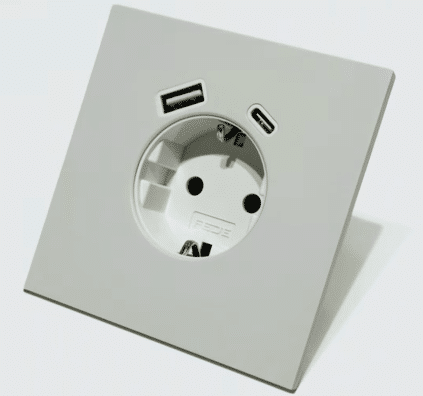
Beyond this, contemporary functionality can be integrated without disturbing the finish. A usb socket built into the plate can combine Type A and Type C charging up to 22W, supporting current device requirements while avoiding loose adaptors on worktops or bedside joinery; the right choice when visual order matters as much as convenience.
Frequently asked questions
What is the practical difference between brushed chrome and satin chrome sockets?
Both are created through fine surface treatment after electroplating, which gives chrome sockets a muted, low-reflective finish rather than the brighter look associated with polished chrome.
That shared treatment explains their similar performance: fingerprints show less readily, upkeep is lighter, and the effect feels cooler and more contemporary in kitchens, living spaces, offices, and other electrical settings. The distinction lies in light diffusion, as satin chrome can appear marginally softer, although the difference is rarely pronounced once the sockets and switches are installed.
Because of that, selection usually depends less on performance than on range coordination. Selection therefore tends to fall on whichever finish the manufacturer offers across matching chrome sockets and switches, whether for a single switched socket, a 13a switched socket, or a full scheme that includes chrome switches, chrome sockets, polished chrome switches, and complementary details from an artisan maker such as FEDE Switch & Light.
Can brushed chrome sockets include dimmer and USB functions on the same plate?
Yes, provided that the configuration is specified correctly. Contemporary screwless collections can combine a dimmer with a 13a switched socket on one plate, and a USB socket can also be integrated into a double format so charging points do not require a separate back box position.
Once selected, the electrical specification matters: dimmer performance must match the connected light source, particularly with LED loads, where control behaviour differs from more traditional systems.
That same principle applies to finish continuity. FEDE Switch & Light, the Spanish artisan manufacturer, develops coordinated brushed chrome sockets and switches, combined dimmer controls, and USB socket formats so that power outlets remain visually consistent across one double or single scheme.
How do brushed chrome sockets coordinate with mixed-metal interior schemes?
That consistency in finish makes brushed chrome especially useful in interiors that mix metals. Its subdued surface absorbs light rather than throwing it back, which allows brushed chrome sockets to sit comfortably beside brighter materials without creating visual noise.
In contrast, reflective finishes need firmer control. The right choice when composing mixed metals is often to pair one muted finish, such as brushed chrome or brushed nickel, with one brighter counterpart such as polished chrome, then repeat that language across sockets and switches, handles, hinges, taps, cabinet hardware, and other electrical details.
Provided that the combinations are deliberate, different finishes can coexist with real elegance: a brushed chrome socket beside polished chrome switches, a 13a switched fitting within a broader family of switched socket designs, or even chrome sockets and switches set against chrome sockets with selected polished chrome accents.