
Architectural switches and sockets: a premium buying guide
15 June 2026
Luxury switch installation and placement: a complete guide
17 June 2026
Whether brass light switches and sockets justify their premium price depends on how material quality and finish longevity weigh against the lower upfront cost of standard alternatives.
Are expensive light switches and dimmer switches worth it
Whether luxury brass switches justify their price depends on tactile quality, finish longevity, and design coherence.
Build quality and materials: what separates premium from budget
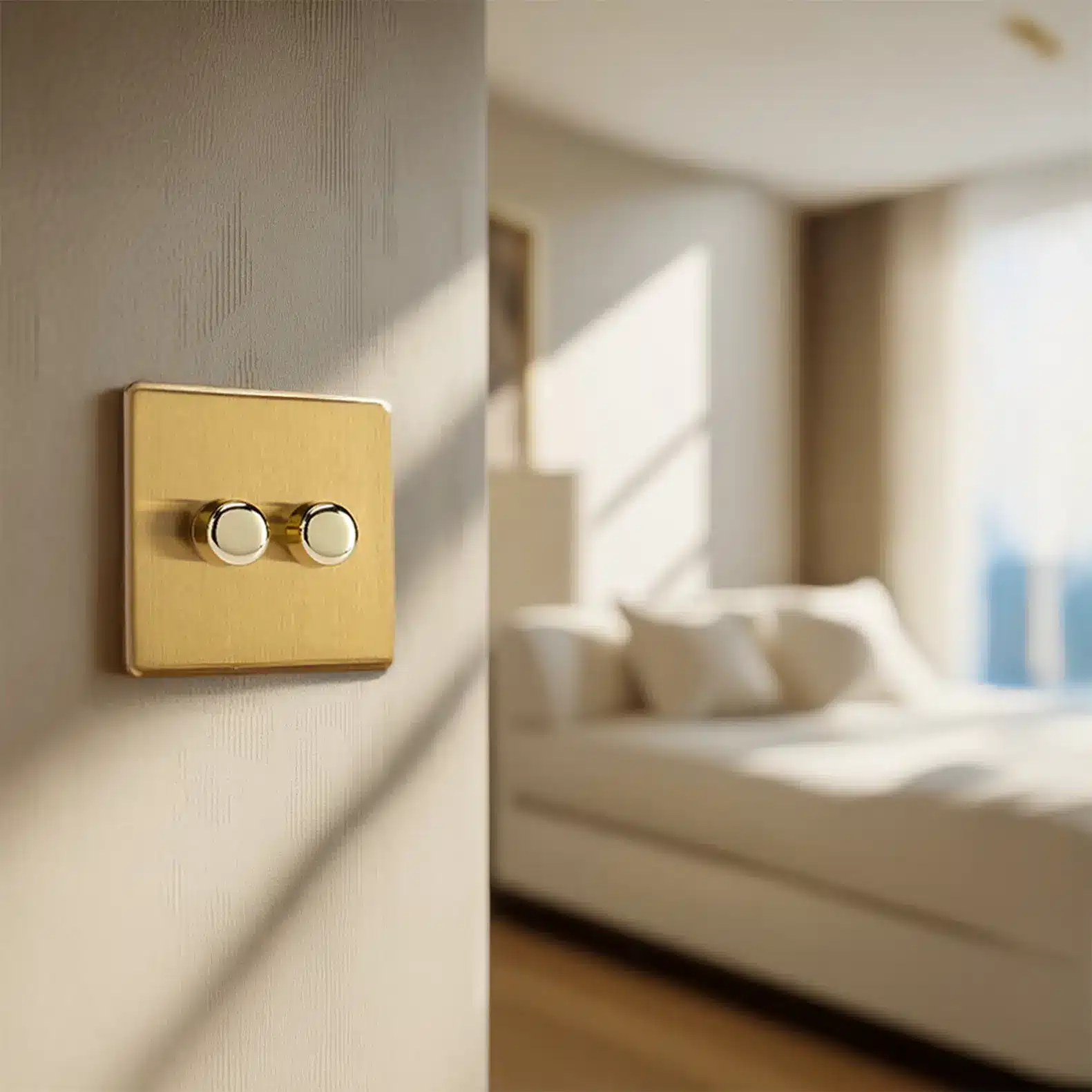
The case for premium specification starts with construction. Solid brass at 0.080 inches thick brings weight, rigidity, and durability that white plastic switches cannot approach. The distinction lies in the material itself: brass resists corrosion for decades, while plated products tend to chip or peel once the coating fails.
- Solid brass construction provides genuine structural integrity, satisfying weight, and a precise click absent from a basic light switch or standard plastic switches.
- Unplated oxidisation Unplated brass develops a natural protective patina over time, gaining character rather than deteriorating, unlike coated metal light switches whose plating can eventually fail.
- Hand-finished surfaces European artisans at FEDE Switch & Light oversee every production stage, giving each switch plate individual character rather than the uniformity of mass production.
That material quality is not only visible. The sound and feel of a wall switch also reveal its level of engineering: budget plastic switches tend to produce a hollow snap, while solid brass offers a measured, controlled click. FEDE Switch & Light, as a Spanish artisan manufacturer, places particular value on that precision.
Aesthetic impact and finish coordination across your interior
Once construction is established, finish becomes the defining visual decision. Choosing switch finishes shapes how sockets and switches relate to door hardware, cabinet fittings, and taps throughout a space. The right choice when specifying a dimmer switch or switch plate is often the one that strengthens the surrounding materials rather than disappearing into white plastic switches.
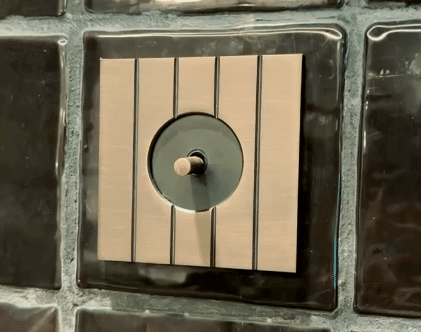
A brushed brass wall switch against oak or marble reads as deliberate. In contrast, a basic light switch in moulded plastic can weaken an otherwise resolved scheme. The same principle applies to all visible electrical details across the room.
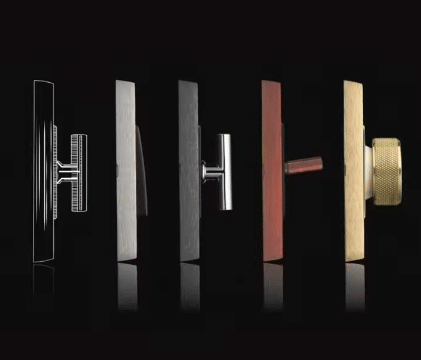
FEDE Switch & Light offers fourteen distinct luxury light switches finishes, developed for different interior contexts. Coordinating switches, plug sockets, and dimmer plates across a scheme creates the visual continuity expected in refined residential and hospitality projects.
| Finish | Aesthetic character | Ideal interior context | Patina behaviour |
| Brushed brass | Warm, muted, understated | Modern and transitional spaces | Engineered to resist tarnishing |
| Antique brass | Deep brown with golden undertones | Traditional or eclectic interiors | Continues developing patina over three months |
| Satin brass | Soft golden tone, understated sheen | Minimalist and neutral schemes | Stable finish, no visible patina |
| Polished brass | Bright, reflective, high-gloss | Formal or jewellery-forward designs | Requires periodic maintenance |
| Matte black | Graphic, contemporary, bold | Industrial and monochrome interiors | Stable, no visible ageing |
Dimmer switch performance, smart features, and LED compatibility
Once selected for appearance, the mechanism must justify the specification. Premium dimmer switches from FEDE Switch & Light use smooth rotary controls with precision-knurled knobs, matching the refinement of their brass frames. Beyond this, the engineering matters in use: dimmer switches designed for incandescent bulbs often cause flickering or buzzing with LEDs, while purpose-built LED-compatible models use pulse-width modulation to maintain stable output.
- LED compatibility Premium dimmer switches are engineered for LED bulbs, avoiding the flicker and noise often found with legacy controls.
- Smart scheduling Bluetooth-enabled systems allow control of light switches and plug sockets through a mobile app, with routines based on time of day or occupancy.
- Voice and app control Smart systems can connect with wider home automation platforms, coordinating lighting with security and climate functions.
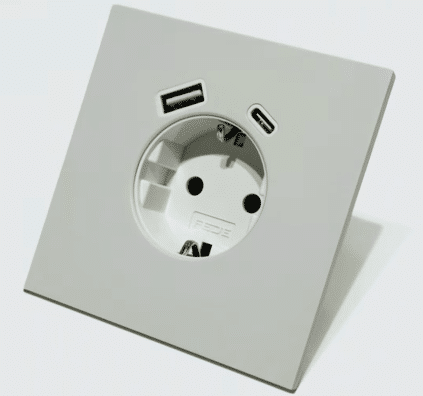
- Integrated USB charging Built-in USB and USB-C outlets can be incorporated within matching brass frames across switches and plug sockets, preserving a unified scheme.
Higher specification can also affect long-term running costs. Energy savings from LED lighting paired with well-configured dimmer switches may offset a higher light switch cost over time, provided that the installation is designed correctly by a qualified electrician.
Cost, installation, and long-term value for homeowners
With performance established, cost can be assessed more clearly. A basic light switch replacement usually costs £50–£100 including labour; a dimmer switch typically falls between £70 and £150; smart models with Wi-Fi connectivity range from £80 to £250 depending on complexity. Professional installation at £40–£70 per hour helps ensure UK regulatory compliance.
In practice, long-term value depends on what the specification is expected to do. A 2 gang light switch or multi-gang arrangement in solid brass, combining light switches and sockets in one coordinated installation, is less a consumable item than part of the interior architecture. The finish determines how well that investment ages: unlike white plastic switches, brass develops character over time.
Beyond this, bespoke options add practical and visual value: engraving, custom RAL finishes, and screwless formats can all refine the final result. The same principle applies to sockets and switches with integrated charging, where utility does not have to compromise design. For projects where detail matters, light switches and plug sockets deserve the same scrutiny as any other visible fitting.
Frequently asked questions
How much should light switches and plug sockets cost?
Total installed costs for light switches and plug sockets usually sit between £50 and £100 for a basic on-off wall switch. They rise to around £70–£150 for dimmer switches, and £80–£250 for connected models with smart features: those figures include electrician labour at £40–£70 per hour, together with the circuit testing normally required.
Standard light switches, white or grey plastic models, keep initial costs low, while premium brass switches and plug sockets command a higher unit price because the material, finish stability, and tactile quality differ markedly.
Does it matter what light switch finishes and materials I choose?
Light switch finishes influence far more than appearance: solid brass resists corrosion for decades and develops a patina with depth, whereas plated surfaces can deteriorate once the coating fails, much as plastic switches yellow or become brittle over time.
In practice, consistency matters just as much as durability. A scheme that mixes warm brass light switches and sockets with cooler plug sockets in chrome weakens the visual discipline of a room, whereas coordinated sockets and switches, from a 2-gang light switch to USB-integrated outlets and a dimmer switch, create the composure expected in refined interiors.
What makes premium light switches worth the investment over standard alternatives?
The right choice when electrical details remain visible is one that combines sound material integrity, a precise mechanism, and a finish that holds its character rather than peeling, cracking, or fading like many standard light switches.
That precision is where FEDE Switch & Light, a Spanish artisan manufacturer, translates craft heritage into contemporary interior design projects. Worth specifying here: fourteen finishes, bespoke engraving, screwless mounting, and integrated USB options within matching frames allow a single coordinated specification across an entire scheme, from a 2-gang switch to a USB-integrated outlet, without compromise on finish or fixing method.