
Decorative light switches and sockets for modern interiors
29 May 2026
Will brass taps go out of fashion in your bathroom?
8 June 2026
Choosing between chrome or brass sockets shapes the character of an entire interior scheme.
Polished chrome vs brass sockets: which finish suits your home?
The distinction lies in the way each surface handles light: polished chrome throws it back with crisp reflection, while brass softens or warms it according to treatment. Both support the same practical formats: USB outlets, dimmers, double-pole sockets, and coordinated controls. Explore the full brass sockets guide for specification detail across FEDE Switch & Light solid brass collections.
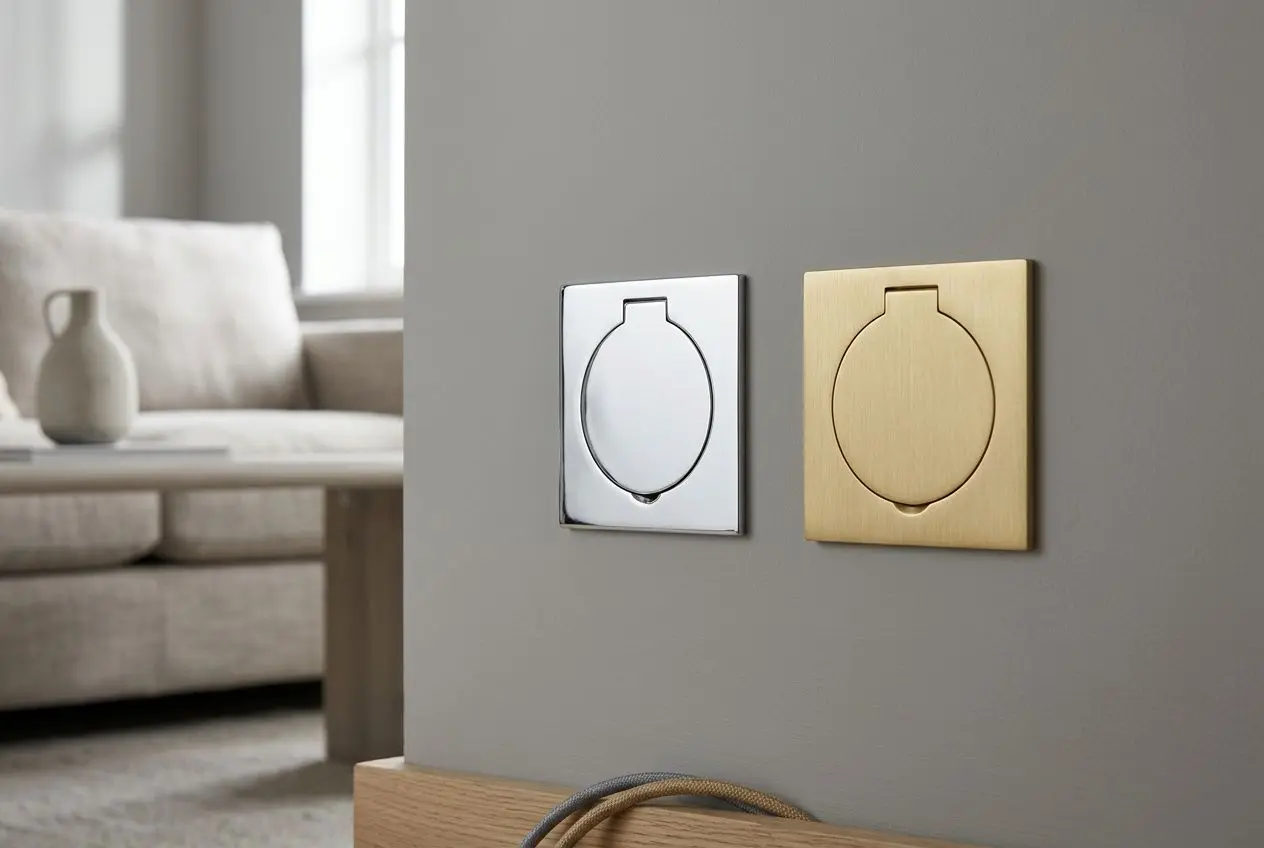
How polished chrome and white sockets compare visually
That play of light sets the visual tone of a room. Chrome sockets in a polished surface bring sharp definition and a mirror effect that can make compact spaces feel deeper, whereas white sockets withdraw into the background. Where white fittings retreat, the choice between chrome or brass sockets turns on a different question: whether the fitting should read as a deliberate detail or dissolve into the scheme.
Why brass sockets suit heritage and contemporary interiors
Once finish becomes the deciding factor, brass offers unusual range. It sits comfortably within listed renovations, decorative apartments, and current interior schemes because its warmth can be tuned from restrained to expressive through different finishes. Browse decorative switches to see how FEDE Switch & Light translates Spanish artisan metalwork into contemporary specification.
- Brushed brass and satin-toned brass surfaces absorb light with a soft matt finish, pairing easily with timber, stone, bold wall coverings, and stainless elements.
- Polished brass sockets bring a reflective golden surface that suits formal rooms where visible metalwork is carefully coordinated.
- Antique brass sockets, including Georgian antique brass sockets and light antique brass sockets, introduce pre-aged character that is especially convincing in period properties and heritage renovations.
Provided that the architectural language is clear, brass can move from classical to modern with ease. By comparison, brushed chrome sockets and satin chrome tend to read as cooler and more architectural, which places them more naturally in contemporary settings than in Victorian or Edwardian interiors. The finish determines the historical register.
Durability and maintenance: brass versus chrome sockets
Solid brass at 0.080 inches thickness gives real backplate rigidity, with each plate contributing roughly 400 to 600 grams per gang and helping anchor the mechanism securely in the wall. The right choice when longevity is the priority is often a true metal substrate rather than a decorative skin.
Beyond this, brass ages with dignity because the character belongs to the material itself. Polished brass, heritage brass, and darker brass variants do not chip to reveal a lesser core; they develop surface depth over time.
Chrome follows a different logic. Polished chrome is engineered for surface stability and resists tarnish, corrosion, and scratching well, while brushed chrome and satin chrome reduce the visibility of fingerprints compared with high-gloss chrome. Review chrome brass sockets material data for full composition detail.
| Property | Solid brass | Polished chrome | Satin chrome |
| Surface character | Warm, matte to reflective | Bright, mirror-like | Cool, directional matt finish |
| Ageing behaviour | Develops natural patina | Stable, no patina | Stable, no patina |
| Fingerprint visibility | Low to moderate | High | Low |
| Heritage compatibility | Excellent | Poor | Poor |
| Moisture environments | Good with lacquer | Excellent | Good |
| Surface treatment options | Up to 14 distinct treatments | Limited variants | Limited variants |
Mixing finishes: can brass and chrome sockets coexist?
As those material differences suggest, mixed metals can work with precision when contrast is controlled. Satin and brushed brass surfaces sit more comfortably beside chrome, stainless steel, or polished chrome than highly reflective brass does, because they temper glare rather than compete with it. A considered approach to mixing relies on balancing sheen as much as colour.
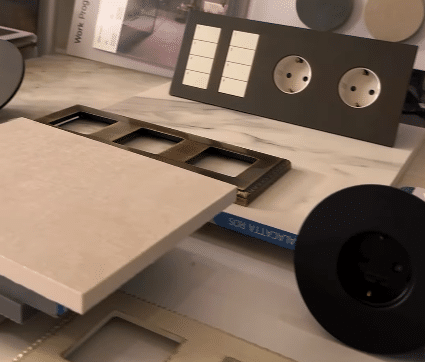
Once selected, the same finish language should continue across the room: handles, hinges, taps, cabinet hardware, and electrical accessories. Brass sockets and switches look most resolved when aligned with related metalwork, while chrome sockets and switches gain coherence when every chrome switch or flat plate outlet shares the same family of metal finishes.
FEDE Switch & Light supports that level of coordination through a broad decorative palette shaped in Barcelona with artisan precision: nickel, chrome, brass, bronze, black bronze, steel, brushed steel, rose gold, pewter, and copper sockets and switches. Worth specifying here: projects weighing chrome or brass sockets often also evaluate polished brass, antique brass, and special finishes such as copper when the brief calls for a more individual material signature.
Frequently asked questions
Is polished chrome or brass better for kitchen sockets?
For kitchen electrical fittings, polished chrome and brushed stainless steel remain dependable specifications. These rooms expose surfaces to grease and regular chemical cleaning, and polished chrome switches, chrome sockets, and satin chrome variants stand up to that use with consistency. Satin chrome switches are equally relevant in practice: the satin chrome surface softens glare under task lighting and shows fewer fingerprints above worktops.
By contrast, brass also performs well in domestic interiors, though in high-exposure kitchen areas it benefits from lacquer protection, whether the specification calls for brass sockets, polished brass sockets, or antique brass sockets.
Do brass sockets look outdated compared to chrome?
Brushed brass and satin brass continue to hold their place in contemporary interiors, while polished chrome carries a sharper architectural expression.
The finish determines the reading: antique or heavily oxidised brass can feel period-specific, whereas satin brass sits comfortably in transitional schemes. Polished brass suits formal rooms; satin chrome and other restrained finishes suit minimalist settings. Beyond this, nickel, nickel sockets, and black bronze broaden the palette for more tailored projects.
Can chrome and brass sockets be used in the same room?
Once selected with care, they can. The right choice when combining metals is to balance surface character rather than simply match colour: satin brass beside polished chrome works because one absorbs light while the other reflects it.
In contrast, pairing polished brass with a highly reflective chrome finish can make a scheme feel visually unsettled. The same principle applies to bronze, pewter, and brushed chrome: one muted surface paired with one brighter one usually gives the most resolved result.
Beyond this, FEDE Switch & Light, the Spanish artisan manufacturer in Barcelona, produces collections spanning chrome sockets, polished brass sockets, and light antique brass sockets, a breadth of specification that makes mixed-metal coordination a practical reality rather than a compromise.