

Exclusive light switches: luxury light switches for every home
25 June 2026
This article applies a direct luxury switch standards framework to material gauge, finish engineering, mechanical precision, and certification compliance. Every specification decision requires verifiable evidence rather than manufacturer claims. The objective is to establish structural requirements for genuine luxury switch performance over time.
Material standards defining genuine luxury light switches
Solid brass at 0.080 inches thickness represents a structural threshold, not a marketing preference. Below this gauge, backplates flex under repeated actuation and finishes delaminate at stress points. Every serious luxury brass switches evaluation begins with a millimetre measurement.
Solid brass as the baseline quality benchmark
Any rigorous luxury switch quality standards assessment starts with the copper-zinc ratio in the alloy. Higher copper content yields a fine-grained substrate that accepts hand-polished treatments precisely. That ratio governs both the initial finish quality and the long-term patina evolution.
Unplated solid brass oxidises into a self-protective patina: a specified material property, not a side effect. Plated alternatives chip at edges over time, exposing the inferior base metal beneath. For any project with a twenty-year brief, unplated solid brass light switches remain the only defensible choice.
Solid brass wall switches contribute between 400 and 600 grams per gang. That weight load requires specific back box anchors on hollow partition walls. I would assess this structural constraint early in the project brief, long before final installation.
Alternative premium substrates and their applications
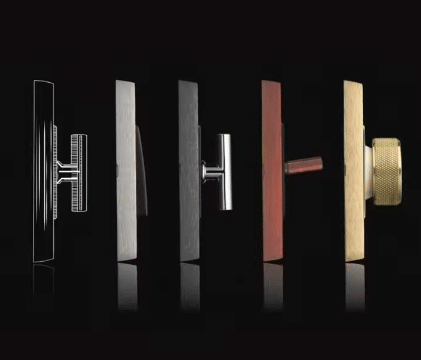
Beyond a brass light switch, premium substrates address highly specific architectural and regulatory contexts. Authentic porcelain satisfies heritage requirements in listed properties where synthetic substitutes fail. Tempered glass delivers reflective depth alongside moisture resistance for demanding wet room applications.
- Transparent acrylic: Renders the faceplate near-invisible against bespoke wallpaper; specified when light switches must recede entirely from view.
- Solid copper: Oxidises to a deep red-brown; specified only when deliberate material evolution explicitly serves the design intent.
- Kiln-fused enamel: Offers surface hardness comparable to vitreous ceramic, with precise RAL colour matching for exact joinery coordination.
Natural overlays, leather and stone veneer, suit premium hospitality contexts where tactile variety is a deliberate intention. These substrates require a screwless magnetic mounting framework to present an uninterrupted fascia. Visible fixings immediately undermine the material investment.
Finish engineering and long-term aesthetic performance
Fede Switch & Light engineers fourteen distinct finishes to govern specific aesthetic outcomes over decades. Antique brass switches are hand-aged to darken further under handling within months. The luxury switch materials selection determines the ten-year maintenance burden for any property.
Finish coordination across luxury light switches, sockets, and hardware creates the visual harmony that distinguishes a resolved interior. A single mismatch undermines the perceived quality of adjacent elements. I would specify all hardware from a single finish family before authorising any joinery orders.
Tactile performance and mechanism quality in light switches
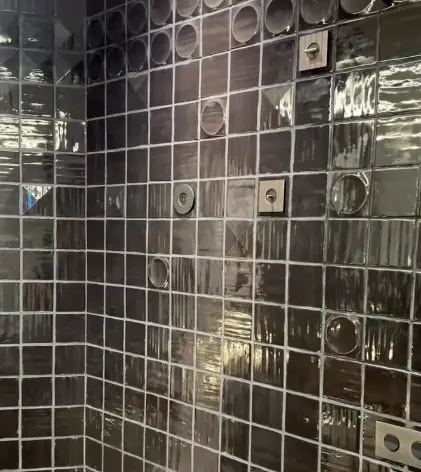
A solid brass toggle mechanism requires a different actuation force than a synthetic switch coated in a metallic film. The distinction becomes apparent within the first week of use, through the weight of the throw and the acoustic profile of the click. These are measurable variables that define a luxury switch, not matters of subjective preference.
Actuation feel, click quality, and mechanical precision
A rigorous luxury switch quality standards assessment demands four strict parameters: actuation pressure, travel uniformity, lateral tolerance, and acoustic signature. I would evaluate all of these by hand before securing the backplate to the wall. A mechanism that displays lateral play under finger pressure is fundamentally compromised, regardless of the finish applied to the plate.
- Actuation force: Resistance must remain identical across the entire travel arc. Fluctuations indicate tooling wear or assembly variances that fail specification requirements.
- Lateral play: Zero millimetres is the only acceptable tolerance. Perceptible side-to-side movement in a toggle or rocker switch flags a clearance issue that thermal cycling will exacerbate over time.
- Click acoustic quality: A contained, damped sound confirms a milled metal component. A hollow, sharp resonance exposes a synthetic core beneath a metallic surface.
The build quality of a solid brass mechanism registers audibly before it registers visually. Concretely, the dense mass of the alloy absorbs internal resonance and produces a controlled mechanical engagement. Synthetic alternatives lack the material density required to replicate this acoustic footprint.
| Mechanism type | Tactile character | Best application | Key quality indicator |
| Toggle switch | Definite click; confirmed actuation | Heritage properties and period restorations | Zero lateral tolerance; rigid travel arc |
| Rocker switch | Smooth engagement with calculated resistance | Contemporary architectural frameworks | Consistent operating force; rigid fascia |
| Rotary dimmer | Fluid rotation; precisely milled knurling | Ambient schemes demanding exact calibration | Uniform torque throughout the rotation |
| Touch dimmer | Capacitive switching; zero mechanical travel | Minimalist spaces; integrated hospitality systems | Zero latency; complete false-trigger immunity |
Dimming technology and LED compatibility standards
Specifying premium light switches alongside contemporary LED arrays requires trailing-edge dimming technology as an absolute baseline. Leading-edge modules trigger visible flicker and audible driver resonance, issues that directly undermine the interior scheme. Confirming trailing-edge compatibility before finalising the schedule avoids costly retrofitting once the plaster is dry.
A dimmer switch must align precisely with the LED load requirements of the luminaire it controls. The specified wattage, the minimum load threshold, and the integrated driver type must all coordinate. Where smart modules are introduced, there is an additional constraint: the need for a neutral wire in the back box, an absence that is common in standard UK residential wiring.
Long-term reliability across production and daily use
Hallway light switches are among the most frequently operated electrical interfaces in any residential floorplan. The durability of internal components under thousands of annual cycles determines the true value of the specification. Maintaining the original tactile resistance of a mechanical toggle over twenty years requires specific metallurgical tolerances.
Repeatable precision across production batches defines the viability of a phased installation. A backplate specified during the initial groundwork must match units delivered for an extension two years later. What changes here is the standard of factory control: dimensional checks and acoustic testing must go beyond routine visual inspection.
A failure within a high-end switch specification damages the perceived integrity of the entire room. In practice, reliability acts as a reputational anchor for the consultant managing the project. I would invariably specify mechanisms backed by documented batch consistency, ensuring the tactile standard remains uniform across every phase of the build.
Certification and installation standards for luxury light switches
A 35mm mechanism lacking proper compliance documentation renders any exterior aesthetic choice structurally irrelevant. Formal certification forms the absolute foundation of a valid specification, proving the luxury switch meets the strict installation requirements of its intended jurisdiction. Specifying luxury light switches without verifying this data introduces liabilities that a flawless patina cannot resolve.
CE, UL, and BS certifications required for compliance
Concretely, a rigorous luxury switch quality standards assessment begins directly with the formal certification record. European and UK markets establish CE marking as the baseline, while VDE approval confirms independent safety verification. Specifying components across borders demands careful attention, as testing criteria vary significantly between regulatory bodies.
- CE marking: Secures alignment with European electrical safety directives. This remains a mandatory criterion for components specified within EU member states and the UK.
- BS 7671 compliance: Dictates that metal plates must connect to earth via properly sleeved protective conductors. This represents a non-negotiable standard for British site installations.
- BS 545 certification: Verifies precise adherence to UK wiring regulations. It ensures complete operational compatibility across domestic and commercial electrical infrastructures.
- IP44 rating minimum: Demands resistance against directional water spray and dust. I would specify this exclusively for bathroom zones or exterior application areas.
Specifying a glass finish on any faceplate introduces strict safety constraints. The material must be fully tempered, ensuring it shatters into blunt fragments rather than hazardous shards upon impact. At Fede Switch & Light, our approach treats this tempering process as an essential material property rather than an optional enhancement.
Electrical safety testing and performance verification
Formal light switches certification mandates distinct performance trials to isolate specific failure modes. Insulation resistance checks guarantee zero current leakage between live conductors and the exterior plate. Dielectric strength testing further proves that internal insulation withstands fault conditions without structural breakdown.
Operating voltage and current capacities must align precisely with the target electrical system. British domestic circuits standardise at 230V, whereas North American residential frameworks operate at 120V. In practice, electromagnetic compatibility testing confirms the light switches function without disrupting nearby sensitive equipment.
UK installation requirements and back box specifications
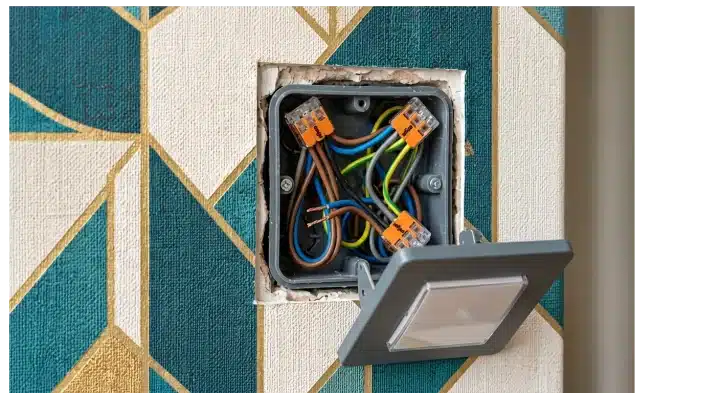
Period property renovations frequently reveal shallow 16mm or 25mm original wall enclosures. A solid brass configuration integrating an advanced dimming module necessitates a back box depth of at least 35mm. Where replastering proves unviable, specifying a metal spacer plate bridges this dimensional gap effectively.
Incorrect faceplate screw length routinely halts site progress during final fit-out stages. Deeply recessed boxes require 50mm M3.5 hardware to properly anchor the mechanism to the wall. Certified electricians must handle these installations, particularly when neutral wire dependencies dictate strict configuration parameters.
Frequently asked questions
What is the minimum brass thickness that defines a genuine luxury light switch?
Solid brass at 0.080 inches thickness across both the plate and mechanism sets the structural baseline for any luxury switch. Below this specification, brass switches lose dimensional stability under repeated actuation, causing surface finishes to delaminate at stress points. Genuine material quality requires this exact measurement: visual inspection alone will not reveal a compromised backplate.
Is trailing-edge dimming required for all LED installations with a high-end switch?
Trailing-edge phase control remains the only defensible specification for LED sources paired with a high-end switch. Leading-edge alternatives typically induce flicker and audible resonance within lighting driver circuits. Confirm compatibility between the dimmer switch and the exact LED driver before finalising the hardware schedule.
What back box depth is required for luxury brass switches in UK properties?
A 35mm back box depth forms the minimum requirement to house the mechanism weight of a brass light switch. Original 16mm or 25mm historical boxes prove incompatible and require either complete replacement or a machined spacer plate. What is often observed on site: fixing lengths need careful verification, with 50mm M3.5 screws frequently necessary to anchor a solid brass plate securely, a detail that standard installations tend to overlook.