
Premium decorative wall switches: best light switches to buy
19 May 2026
Decorative switches for interiors: buying guide
22 May 2026Understanding the materials for luxury switches forms the foundation of any precise specification brief. An inadequate substrate compromises the finish above it, while the correct material maintains structural integrity over decades. Below, I detail the primary materials applied to premium mechanisms, comparing their exact performance properties to provide concrete criteria for specification.
Best materials for luxury light switches and sockets
A solid brass construction at 0.080 inches thick across every component establishes the baseline for authentic luxury light switches. This material requirement is structural rather than purely aesthetic; the underlying substrate dictates how a mechanism handles twenty years of actuation. When evaluating solid brass switches, verifying this base construction standard is the primary technical requirement.
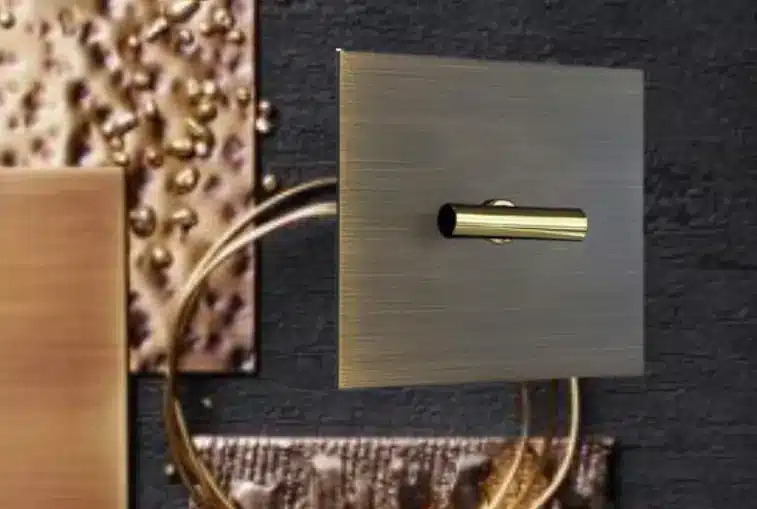
Why solid brass leads in luxury light switches
Solid brass dominates the specification of materials for luxury switches because its precise copper-zinc ratio permits fine-grained finishing that plastic or zinc alloys cannot achieve. A higher copper content yields a softer alloy; a higher zinc proportion produces a harder substrate. This specific grain structure governs how uniformly the surface accepts polishing and how stably it retains a finish under continuous tactile contact. Production stages, from initial material grading to final manual polishing, are managed directly by specialists in Valencia and Barcelona.
- Gauge consistency: Forming switch plates and rockers at a strict 0.080-inch thickness guarantees backplate rigidity, eliminating material flex under actuation force.
- Patina integrity: Unlacquered brass naturally develops a protective oxidation layer, whereas plated alternatives inevitably chip to expose inferior base metals.
- Tactile precision: A solid brass toggle delivers a measured, mechanical click; synthetic mechanisms produce a hollow sound that betrays cost-cutting.
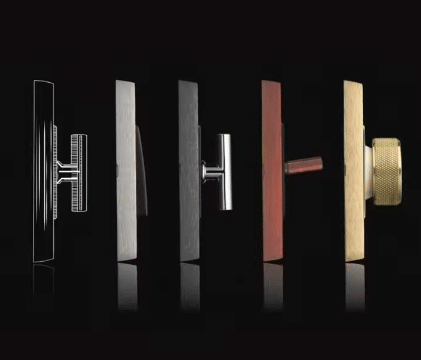
- Finish range: The dense brass grain accommodates fourteen distinct surface treatments, ranging from polished brass and brushed brass to matte black.
The functional distinction between a milled brass mechanism and a plated substitute reveals itself immediately in the backplate mass. Concretely, a solid brass plate contributes 400 to 600 grams per gang, which means the installer must evaluate load-bearing constraints on hollow partitions. This additional weight serves a specific structural purpose: it anchors the mechanism firmly within the wall system.
Glass, ceramic and porcelain for designer light switches
Authentic porcelain plates deliver a distinctly cool, vitreous texture that metallic substrates cannot replicate. When specifying designer light switches for early twentieth-century restorations, ceramic and porcelain present a more historically accurate faceplate than brass. These traditional insulators satisfy strict conservation requirements in listed properties where modern finishes would compromise the architectural brief. For light switches destined for tightly regulated restoration environments, solid porcelain remains the most technically defensible specification.
Tempered glass faceplates, manufactured in stark white or deep black, introduce architectural depth through their highly reflective index. Transparent acrylic formats render the plate almost invisible, allowing intricate wallpaper or specialist paint finishes to read without visual interruption. I would specify glass and chrome in bathrooms for their superior moisture resistance; transparent plates suit living spaces where wall treatments take precedence. Reviewing the precise metal switch materials alongside these vitreous options clarifies the technical boundaries of each substrate.
| Material | Tactile property | Optimal architectural context | Moisture tolerance | Patina development |
| Solid brass | Weighty, precise, warm | Residential, hospitality, period | High (unplated) | Natural, progressive |
| Porcelain / ceramic | Smooth, cool, refined | Period, farmhouse, cottage | Good | None |
| Glass | Hard, cool, reflective | Contemporary, bathroom | Excellent | None |
| Clear acrylic / Perspex | Lightweight, neutral | Feature wallpaper, painted surfaces | Good | None |
| Aluminium | Light, rigid, modern | Minimalist, commercial | Excellent | None |
| Oak / bakelite | Warm, natural, textured | Heritage, vintage | Low | Gradual (oak) |
Bespoke and alternative materials for premium switches
Beyond brass and porcelain, the specification of high-end switches incorporates solid copper, machined aluminium, and authentic bakelite. Solid copper acts as a softer substrate that oxidises to a deep red; I would specify it strictly when a brief demands living material character over uniform stability. Machined aluminium, deployed in Fede Switch & Light’s Twenty and Studio collections, accepts exact RAL powder-coating, suiting commercial spaces. You may cross-reference the luxury switch materials across technical data sheets to verify alignment with your architectural brief.
- Solid copper: A highly reactive metal yielding a reddish-brown oxidation, appropriate only when material evolution forms a deliberate part of the design intent.
- High-intensity enamel: Fused via traditional kilning in the SMALTO ITALIANO range, this vitreous coating offers considerable surface hardness and precise colour matching.
- Leather, stone, and wood veneer: Natural overlays specified in premium hospitality projects where the electrical switch must integrate seamlessly as bespoke joinery hardware.
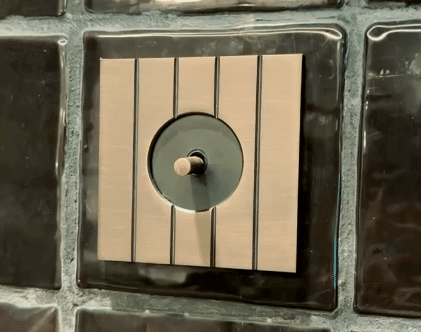
The screwless mounting framework engineered by Fede Switch & Light removes visual interruptions from the fascia. This mechanical detail is critical when presenting uninterrupted expanses of bespoke enamel or natural stone.
Choosing the right finish for every room and style
The standard palette for architectural switches encompasses brushed chrome, black nickel, antique bronze, brushed steel, and graphite. These metallic treatments are chemically engineered for exact architectural registers and should not be specified interchangeably. Hand-aged antique brass darkens considerably within three months of tactile use, remaining the most credible specification for historical renovations. By contrast, satin brass receives a protective lacquer to halt oxidation, ensuring consistent premium finishes across all switch plates in contemporary environments.
Environmental factors strictly dictate the final material specification. Kitchen environments demand stainless steel or dense plastic for their resistance to chemical cleaners and grease accumulation. Vitreous glass and polished chrome perform reliably under the heavy moisture loads typical of enclosed bathrooms. Cool finishes such as milled graphite or bright nickel integrate precisely into stark, monochrome interior schemes where warmth would cause visual friction. Aligning mechanisms across light switches and sockets, plug sockets, and dimmer switches with architectural ironmongery produces a rigorously resolved interior scheme.
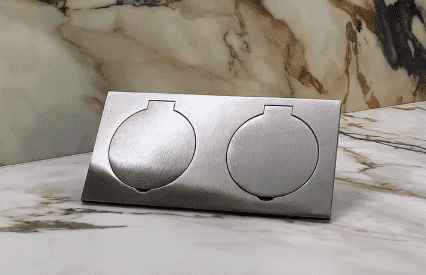
When deploying decorative light switches as prominent architectural hardware, I would specify premium light switches in heavy brass against cut marble, and milled rocker switches in graphite against exposed concrete. Unlacquered toggle switches suit residential briefs demanding authentic material evolution; for commercial zones requiring uniformity, lacquered variants provide the required stability. In practice, the smooth feel of a calibrated mechanical throw against a heavy brass plate physically validates the entire specification.
Frequently asked questions
What materials are used to make luxury light switches?
Solid brass at 0.080 inches thick forms the primary substrate across each premium plate, rocker, and toggle mechanism. I would specify this material for its substantial weight, fine-grained capacity, and long-term corrosion resistance.
Beyond brass, genuine porcelain, solid copper, and bespoke materials such as stone veneer serve specific interior applications. The underlying substrate dictates how finishes perform over time: material selection always precedes visual preference.
Which finish should I specify for a luxury switch in a period property?
An antique brass finish represents the most defensible specification for heritage interiors. It undergoes hand-ageing to a deep brown and continues natural patina development across three months of daily handling.
The result reads as a material with genuine history rather than a superficially applied effect. For Victorian-era settings, genuine porcelain serves as a period-accurate alternative; brushed chrome, by contrast, directly contradicts the architecture.
Do luxury switches contain precious or rare metals?
Luxury light switches omit conventional precious metals in favour of precise brass alloy compositions. Controlling the ratio of copper to zinc is what separates these mechanisms from basic plastic alternatives.
Higher copper content yields the highly workable brass necessary for premium-grade surfaces. Concretely, the true value of solid light switches in the luxury segment resides in alloy quality and gauge consistency rather than silver content.